

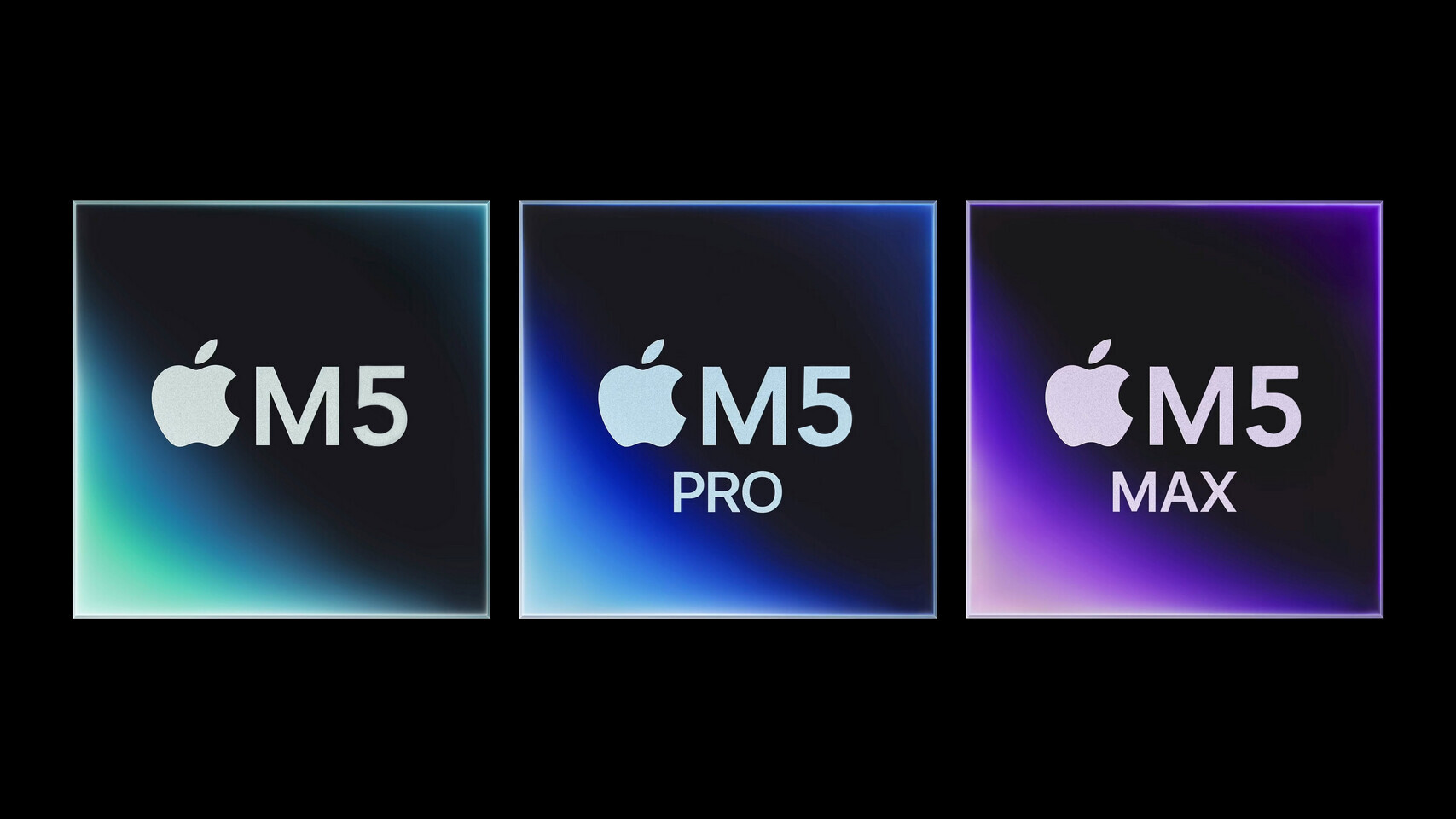
According to the latest rumors, Apple’s upcoming M5 Pro and M5 Max chips could debut as early as March 2026. Earlier leaks indicated the first half of 2026. Reports from Chinese tipster “Fixed-focus digital cameras” suggest that Apple will unveil new SoC processors at that time. This may happen alongside new hardware such as refreshed MacBook Pro or a Mac Studio workstation. The leaks also highlight that Apple plans to use TSMC’s new SoIC (System-on-Integrated-Chip) packaging, which could slightly reduce manufacturing costs.
Launch timing: Apple is reportedly set to announce the M5 Pro and M5 Max in March 2026. This shortens the wait after a longer hiatus. The M4 Pro/Max debuted in November 2024, which was analyzed in detail in our previous article on Apple M5.
New hardware: Chip launches are typically accompanied by new devices. This could include a new MacBook Pro lineup from Apple or a Mac Studio equipped with the M5 Max.
SoIC packaging: Apple plans to adopt advanced SoIC packaging, stacking silicon components vertically. Transitioning to SoIC is expected to lower chip production costs and improve cooling efficiency.
Advanced SoIC Packaging – Benefits and Savings
Apple is gradually moving to new chip integration methods to meet rising performance demands. SoIC (System-on-Integrated-Chip) packaging enables vertical stacking of silicon layers, offering several advantages:
- Lower manufacturing costs: The tipster claims that using SoIC will make Apple M5 Pro and M5 Max slightly cheaper to produce. While the savings may not be huge, every reduction counts given the current DRAM shortage.
- Better cooling: SoIC allows more efficient heat dissipation (e.g., via thinner chip interconnections), helping maintain lower operating temperatures. Previous M5 tests showed that under heavy load, temperatures could reach ~99°C—improved packaging helps mitigate this.
- Flexible core configuration: SoIC allows CPU and GPU cores to be placed on separate silicon blocks. This architecture enables tailored chip configurations, such as increasing GPU or CPU cores depending on user needs.
Through these changes, Apple aims to offset rising component costs. The company is already feeling price pressure from memory—Tim Cook confirmed that DRAM prices are “rising significantly” and starting to squeeze Apple’s margins. Launching M5 Pro/Max with SoIC packaging is one way to partially curb production expenses.
Rising Costs and Loss of TSMC Priority
The semiconductor market is facing challenges—demand for AI-focused DRAM is surging, while traditional consumer memory is limited. As a result, leading DRAM makers (Samsung, SK Hynix) warn that smartphone and PC manufacturers must brace for supply constraints and higher prices. Apple has confirmed that “rising DRAM prices” are impacting margins in the next quarter.
Additionally, Apple’s relationship with TSMC is changing. As AI chip demand grows (especially GPUs from Nvidia/AMD), TSMC is allocating more advanced production lines to these clients. Reports suggest that Apple has lost some of its previous “priority” treatment—previously, the fastest processes and production slots were reserved for iPhone chips, but now AI-focused chips are taking precedence. TSMC has also indicated substantial price increases, reportedly the largest in years.
This means Apple effectively pays more to manufacture its chips and is no longer “first in line.” Cutting costs at various stages—via SoIC packaging and memory optimization—is now more important than ever. Without its former TSMC privileges, the M5 Pro/Max also has to compete with AI partners for N2/N3 lithography, further raising per-unit costs.
Intel Core Ultra 7 356H – Competition from the PC World
Amid these developments, Apple will face competition from Intel’s new processors for laptops and workstations. At CES 2026, Intel unveiled its mobile Core Ultra 3 (Panther Lake) lineup, including the Core Ultra 7 356H. This 16-core chip features 4 high-performance P-cores, 8 mid-tier E-cores, and 4 low-power LP-E cores, clocked up to 4.7 GHz. It includes 18 MB of L3 cache, integrated graphics (4 Xe3 cores), and a dedicated AI unit capable of 50 TOPS.
Compared to the upcoming M5 Pro/Max, the Intel 356H is built on a 1.8 nm process (Intel 18A) and supports LPDDR5-9600 up to 96 GB or DDR5-7200 up to 128 GB. Its TDP reaches 80 W (with turbo mode), positioning it in the high-performance laptop and lightweight workstation segment. With 16 cores and AI optimizations, Intel promises a +60% boost in multi-threaded performance and graphics performance comparable to a discrete RTX 4050 in games.
Intel Core Ultra 7 356H (Panther Lake) therefore presents a very similar specification to Apple’s M5 Pro/Max: both feature 16 cores and strong AI potential. Differences lie in architecture (x86 vs ARM) and GPU/AI implementation details, but in practice, both target the same segment: professional laptops with high computational power, graphics performance, and AI acceleration. The Apple vs Intel mobile processor race in early 2026 promises to be intense.
Sources: Gizmochina.com

0 Comments