


—
A Tale of Understated Power
When Apple pulls back the curtain on a new piece of hardware, every specification is scrutinized, every percentage point of improvement is debated. For the latest MacBook Pro, powered by the formidable M5-series chip, the company’s marketing focused on the expected CPU and GPU gains. Tucked away in the press release was a familiar-sounding claim: the solid-state drive (SSD) offered “up to 2x faster SSD performance” compared to its predecessor. It’s the kind of incremental-but-welcome upgrade we’ve come to expect. A solid step forward.
But then the machines got into the hands of independent testers, and the real story began to emerge. The team at the popular YouTube channel Max Tech, known for their exhaustive benchmarking, ran the new 512GB MacBook Pro through the industry-standard Blackmagic disk speed test. What they found wasn’t just a solid step forward; it was a quantum leap. While the write speeds—the rate at which data is saved to the drive—clocked in at an impressive 6,068 megabytes per second (MB/s), a roughly 1.85x improvement over the M4 model’s 3,293 MB/s and neatly in line with Apple’s “up to 2x” promise, the read speeds told a completely different, far more exciting story.
The new M5 MacBook Pro registered a blistering 6,323 MB/s in read performance. The previous M4 model? A mere 2,031 MB/s. That’s not a 2x improvement. It’s an astounding 3.1x increase. This wasn’t just a case of Apple hitting its target; it was a case of obliterating it, suggesting a fundamental architectural change under the hood that the company chose not to trumpet. Our own internal tests on 1TB models confirmed the trend, showing read speed gains well over 2.3x the prior generation. In an industry where a 20% gain is considered a victory, a 200% improvement in a core component is nothing short of a revolution.
Beyond the Benchmarks: What Speed Really Means
It’s easy to get lost in a sea of megabytes and multipliers, but these numbers represent a tangible shift in the user experience, fundamentally changing the relationship between the user and their most demanding tasks. The bottleneck for many modern workflows is no longer raw processing power, but the speed at which the processor can access the data it needs to work with. A faster SSD means less waiting and more creating.
Fueling the On-Device AI Explosion
Apple’s most explicit hint at the SSD’s purpose came with the line that it could “load a local LLM faster.” This is a direct nod to the new era of on-device Artificial Intelligence. Large Language Models (LLMs), the engines behind tools like ChatGPT, are massive, often spanning tens of gigabytes. Running them locally—on your machine, not in the cloud—offers huge advantages in privacy, security, and speed, but requires constant, rapid access to that enormous dataset. The M5 MacBook Pro’s colossal read speed means that when you ask your local AI assistant a question, the model’s “brain” can be loaded into memory almost instantaneously.
“Think of it like a human brain trying to recall a memory,” explains a technology analyst. “The M4 machine had to slowly walk to the archives, find the right filing cabinet, and pull the folder. This new M5 machine has the entire archive pre-organized on a desk in front of it. The speed of recall is the difference between a frustrating delay and a seamless, natural interaction. This SSD isn’t just a feature; it’s the foundation for Apple’s entire on-device AI strategy.”
A New Playground for Creative Professionals
For years, creative professionals have been engaged in an arms race against file sizes. Higher resolution cameras, 8K video, and complex 3D models have pushed storage to its limits, leading to the dreaded “spinning beachball” of death as applications struggle to load assets. This SSD upgrade is a direct answer to their prayers.
For the Video Editor
Imagine editing a multi-camera 8K documentary. With the previous generation’s SSD, scrubbing through the timeline or switching between camera angles could introduce lag or dropped frames as the system struggled to read multiple high-bandwidth video streams at once. With over 6,000 MB/s of read bandwidth, the new MacBook Pro can handle these tasks with an effortless fluidity that was previously the exclusive domain of high-end desktop workstations with complex RAID arrays. Exporting final projects also gets a boost from the fast write speeds, but the real game-changer is the real-time editing experience.
For the Photographer and Designer
For a professional photographer, culling through thousands of high-resolution RAW images in an application like Adobe Lightroom or Capture One can be a tedious process of waiting for each photo to render in full quality. The M5 MacBook Pro’s read speed drastically cuts down this preview and loading time, allowing for a more fluid and efficient workflow. Similarly, a graphic designer working on a massive multi-gigabyte Photoshop file with hundreds of layers can now open the project, zoom in, and manipulate elements with a newfound snappiness, as the system is no longer choked by the constant need to fetch data from the drive.
Unpacking the Engineering Marvel
So, how did Apple achieve this monumental leap? The company is notoriously tight-lipped about its specific component choices, but we can make some educated inferences based on the performance gains. The dramatic increase in speed, particularly on the read side, points to more than just a simple upgrade in the NAND flash memory chips themselves. It suggests a more sophisticated and deeply integrated architecture.
The Power of Vertical Integration
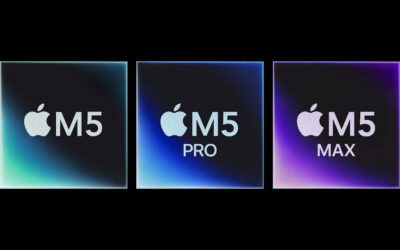
This is likely a direct result of Apple’s vaunted vertical integration—the philosophy of designing the hardware, the chip, and the software in tandem. The SSD controller, the crucial piece of logic that manages the flow of data, is not an off-the-shelf part but an Apple-designed component built directly into the M5 System-on-a-Chip (SoC). This allows for an unprecedented level of optimization. You can read more about the upcoming Apple M5 Pro and M5 Max launch with new SoIC technology and how it could impact performance and efficiency.
- A Wider Memory Bus: Apple may have significantly widened the number of parallel channels connecting the SoC to the NAND flash chips, allowing more data to be read simultaneously.
- Next-Generation NAND: The use of the latest generation of 3D NAND flash technology provides higher density and faster individual chip performance.
- Advanced Controller Logic: The custom-designed controller likely employs more aggressive caching algorithms and predictive loading, anticipating what data the CPU and GPU will need next and pre-loading it.
This holistic approach, where the storage controller can communicate directly and efficiently with the CPU, GPU, and Neural Engine, creates a system where the whole is far greater than the sum of its parts. It’s an advantage that competitors using off-the-shelf components from different vendors simply cannot replicate.
The Marketing Conundrum: Why So Quiet?
This leaves us with a fascinating question: If this upgrade is so revolutionary, why did Apple downplay it? Why settle for a modest “up to 2x” claim when they could have justifiably boasted about a 3x leap? There are several plausible theories.
The “Under-Promise, Over-Deliver” Strategy
One possibility is that Apple is playing a long game. By setting a conservative expectation and then allowing independent reviewers to discover the truly mind-blowing performance, they generate a wave of authentic, enthusiastic press that is often more valuable than a company’s own marketing. It creates a narrative of hidden gems and delightful surprises, fostering immense customer goodwill.
A Focus on the Holistic Experience
Another theory is that Apple wants to shift the conversation away from individual component speeds and towards the overall user experience. In their view, the customer doesn’t care about megabytes per second; they care about how quickly their app launches or their video renders. The SSD is just one part of the M5’s performance story, and perhaps Apple felt that singling it out would distract from the chip’s broader capabilities. They are selling the result—a magically fast computer—not the individual ingredients.
The Perils of “Up To”
Finally, there’s the practical consideration of managing expectations across an entire product line. SSD performance can vary slightly based on the capacity of the drive (larger drives are often slightly faster due to having more NAND chips to read from in parallel). By sticking to a more conservative “up to 2x” figure, Apple gives itself a safe marketing buffer that covers all configurations and use cases, avoiding any potential complaints from users whose specific setup might “only” be 2.5x faster, not the full 3x.
Whatever the reason, the result is the same. The SSD inside the latest MacBook Pro is the machine’s unsung hero. While the M5 chip rightly gets the headlines for its processing prowess, it’s the storage system that truly unlocks its potential. It removes the final significant bottleneck in modern computing, paving the way for a new generation of applications that are more complex, more data-intensive, and more intelligent than ever before. This isn’t just an upgrade; it’s a foundation for the future, quietly slipped into the present.
—
Source: https://www.techradar.com


0 Comments