

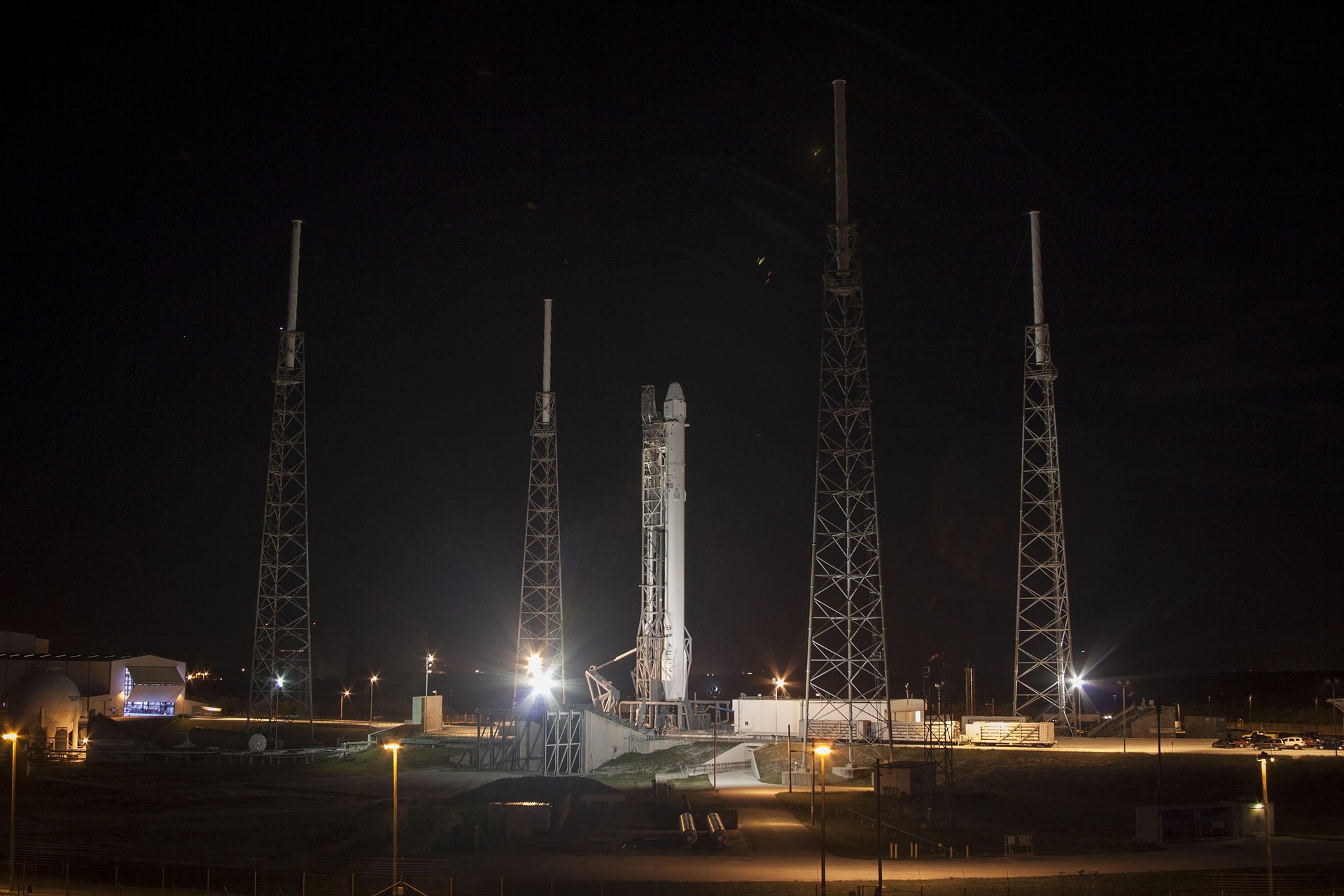
NASA began 2026 grappling with an Arctic cold snap that delayed the Artemis II lunar mission, while SpaceX and partners marked major satellite milestones and new collision-avoidance tools. Meanwhile commercial launchers and international programs stay busy: Europe is readying Ariane 6 flights for new constellations, China kicked off multiple launches and prepares a lunar south pole mission, and private firms like Rocket Lab are ramping up.
NASA and ISS Missions
NASA’s big news was the Jan. 15 return of the SpaceX Crew-11 mission from the International Space Station. The four-person crew (two NASA astronauts, one JAXA astronaut, one Roscosmos cosmonaut) splashed down off Southern California after 167 days in orbit, a mission tallying about 71 million miles over 2,670 orbits. They completed over 140 science experiments aboard the station – work that NASA Administrator Isaacman said “advance[s] human exploration.” The return was about a month early: NASA said one crew member had a medical issue (now stable) and coordinated a planned “medical evacuation” back to Earth. In parallel, Congress approved roughly $27.5 billion for NASA’s FY2026 budget (an inflation-adjusted high for the agency), ensuring funding for Artemis, science missions and astronaut training.
In Florida, NASA’s Artemis II moon mission is also on the front burner. An Arctic cold snap forced officials to delay the Space Launch System wet dress rehearsal (fueling test) until Feb. 2, pushing Artemis II’s earliest launch to around Feb. 8. Artemis II will be the first crewed Orion spacecraft flight, taking four astronauts on a lunar flyby – humans’ closest approach to the Moon in over 50 years. With launch dates squeezed, NASA is juggling schedules with the next ISS crew swap: the SpaceX Crew-12 flight (carrying NASA’s Jessica Meir and Jack Hathaway, ESA’s Sophie Adenot, and Roscosmos’ Andrey Fedyaev) is aiming to launch no earlier than mid-February (Feb. 11–12 at the earliest), after Artemis II has safely lifted off and returned. NASA officials emphasize Artemis has launch priority, and Crew-12 may slide later in Feb. if needed to avoid schedule conflicts.
SpaceX and Satellite Constellations
SpaceX continued to bulk up its Starlink broadband network. On Jan. 29 a Falcon 9 rocket lofted 25 more Starlink satellites – including SpaceX’s 11,000th Starlink launched since 2019. These additions bring the in-orbit Starlink constellation to roughly 10,000+ satellites (per SpaceX tracking data). SpaceX also unveiled a major space-traffic management advance: a new “Stargaze” space situational-awareness system. Built on the 30,000 star-tracker sensors aboard Starlink satellites, Stargaze can detect orbital conjunctions in minutes rather than hours, potentially spotting maneuvers that ground radars miss. SpaceX says it will provide Stargaze data free to all satellite operators via its traffic-management platform, hoping to reduce collision risk across crowded orbits.
On the launch-vehicle front, SpaceX announced the next test flight of its Starship heavy launcher. CEO Elon Musk tweeted in late January that the upcoming Starship mission (“Flight 12,” debuting Starship V3) is slated for about six weeks out (roughly early March). The Starship V3 design will carry new Raptor V3 engines with nearly double the thrust of the current Raptors, a key step toward SpaceX’s goal of a fully reusable moonship.
Commercial Launchers and Europe
The rapid pace of European space activity extends well beyond deep-space science missions such as Europa, a moon in constant motion – new discoveries thanks to the James Webb Telescope.
The commercial launch sector is active, with new contracts and missions underway. On Jan. 27 Arianespace announced it signed a contract with the European Union’s space agency (EUSPA) to launch the next pair of Galileo navigation satellites (Galileo L18) on an Ariane 6 rocket. Ariane 6 successfully launched two Galileo L14 satellites in Dec. 2025, and more missions are planned for Galileo L15/L16; the L17/L18 launches will complete Europe’s next-gen constellation rollout. In tandem, Arianespace is gearing up for the first Ariane 64 (four-booster) flight on Feb. 12, 2026: this mission (VA267) will carry 32 satellites for Amazon’s Project Kuiper LEO internet network, the first of 18 planned Ariane 6 launches for Amazon Leo. (Amazon’s goal is fast, global broadband from space; Ariane 6 will demonstrate its full-lift capability by injecting 20+ ton payloads to low Earth orbit.)
Elsewhere in the private sector, Rocket Lab has started the year strong. In its first two Electron launches of 2026 (Jan. 22 and 30), Rocket Lab deployed six satellites: two Open Cosmos telecom satellites to 1050 km altitude, and Korea’s KAIST NEONSAT‑1A Earth-imaging satellite to 540 km. CEO Peter Beck noted this “two launches in eight days” run exemplifies demand for fast, reliable small-rocket rides to space. Rocket Lab also reported progress on its future Neutron heavy-lift launcher: the company’s novel reusable payload fairing (dubbed “Hungry Hippo”) arrived at the Wallops Island (Virginia) launch complex for integration. Neutron is designed as a 13-ton reusable rocket with innovative fairing halves that stay attached and are recovered; Rocket Lab says this architecture will greatly reduce launch costs.
China’s Ambitions
China opened 2026 with back-to-back Long March launches on Jan. 15. A Long March 6A lifted off late evening from Taiyuan. It carried the Yaogan-50A remote-sensing satellite. Minutes later, a Long March 8A launched from Hainan. It deployed 18 new satellites for China’s homegrown internet mega-constellation, bringing the network to over 140 satellites on orbit.
State media noted that 2026 will be very busy. China plans the Chang’e 7 lunar mission later this year. This robotic south-pole explorer will carry an orbiter, lander, rover, and a flying probe. Its goal is to hunt for water ice in permanently shadowed craters.
Two crewed Shenzhou flights (XXIII and XXIV) are also expected. They will perform crew rotation at China’s Tiangong station. One Shenzhou is slated to stay a full year in orbit. Reports suggest China may send its first foreign astronaut, likely Pakistani, aboard Tiangong in 2026.
Sources: NASA press releases and Spaceflight Now reports for ISS/Artemis updates, Spaceflight Now and Teslarati for SpaceX/Starlink news.

0 Comments