

The Enduring Power of ‘What If’: A November Sci-Fi Deep Dive
Science fiction has always been more than just spaceships and laser beams; at its core, it is a genre of profound inquiry. It takes our contemporary anxieties, our political divisions, our hopes, and our hubris, and projects them onto vast, imaginative canvases. Through the lens of the impossible, we can often see our own world with startling clarity. Whether it’s a society governed by intelligent apes, a demon destined to end the world, or a creature stitched together from corpses, these stories serve as powerful allegories for our own struggles with power, identity, and belonging. The three films highlighted from Max’s November catalog are not merely entertainment; they are cultural touchstones, each offering a unique and timeless exploration of these grand themes. They represent the pinnacle of cinematic storytelling, blending breathtaking spectacle with the kind of intellectual and emotional depth that stays with you long after the credits roll.
More Than Monkeys: The Sociopolitical Brilliance of Dawn of the Planet of the Apes
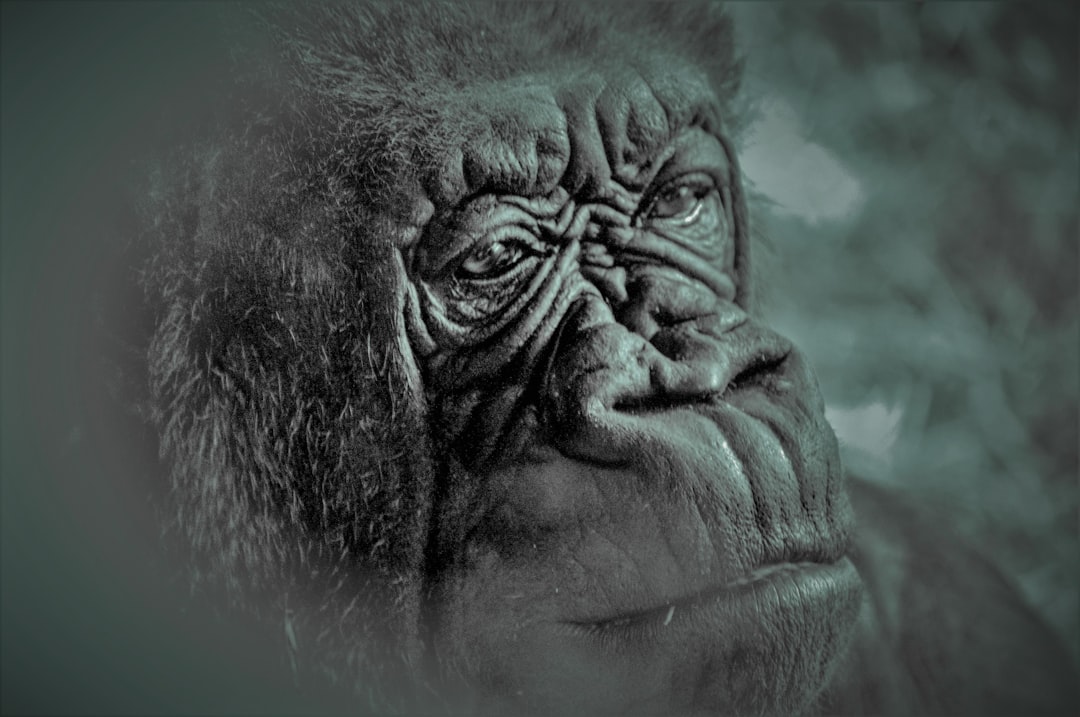
Released in 2014, Dawn of the Planet of the Apes achieved something remarkably rare for a summer blockbuster and a sequel in a rebooted franchise: it demanded to be taken seriously. Building on the solid foundation of Rise of the Planet of the Apes, director Matt Reeves crafted a film that is less an action spectacle and more a Shakespearean tragedy wrapped in the skin of a post-apocalyptic epic. The story picks up a decade after the Simian Flu has decimated humanity, with a fragile colony of human survivors in San Francisco unknowingly bordering the burgeoning civilization of intelligent apes led by the noble Caesar. What unfolds is a tense, heartbreaking exploration of diplomacy, tribalism, and the devastating cycle of violence, where the perceived “monsters” exhibit more humanity than the humans themselves.
Forging a New Dynasty: The Tech and Talent Behind the Uprising
The film’s technical achievements are nothing short of revolutionary, representing a watershed moment for performance-capture technology. Weta Digital, the New Zealand-based visual effects powerhouse, elevated the art form to an unprecedented level of realism. The apes are not just digital creations; they are fully realized characters, their faces conveying every flicker of doubt, rage, and sorrow. This is largely thanks to the transcendent work of Andy Serkis as Caesar, an actor who has become the undisputed master of the craft. Serkis argued passionately that performance-capture is not a technological process but an acting one, stating in an interview, “Performance capture is a technology that is used to record an actor’s performance… the emotional truth of the character comes from the actor.” His portrayal of Caesar is a masterclass in subtlety and power, a performance so nuanced and emotionally resonant that it sparked serious debate about whether such roles should be eligible for major acting awards. The seamless integration of these digital characters into real, rugged locations in the forests of British Columbia—often in pouring rain and difficult conditions—lends the film a gritty, tactile reality that sets it apart from its green-screen-heavy contemporaries. This commitment to verisimilitude paid off handsomely, with the film grossing over $710 million worldwide and earning an Academy Award nomination for its stunning visual effects.
A Mirror to Humanity: Conflict, Empathy, and the Fragility of Peace
Beyond the technical wizardry, the film’s true power lies in its thematic depth. The narrative brilliantly parallels the apes’ internal political struggles with those of the humans. Caesar, haunted by his compassionate upbringing among humans, strives for peace and understanding. His foil is Koba, an ape physically and emotionally scarred by human experimentation, whose hatred and mistrust ultimately ignite the flames of war. This central conflict is a poignant commentary on how trauma can fester into extremism and how fear is the most effective tool for dismantling diplomacy. The film dares to present a morally complex world with no easy villains. Gary Oldman’s character, Dreyfus, the leader of the human survivors, is not a one-dimensional antagonist but a man driven by grief and a desperate need to protect his people. As critic A.O. Scott wrote for The New York Times, “Dawn is not just a good genre movie… it’s a genuinely thoughtful and even moving film.” It forces the audience to question their own allegiances and to recognize that the capacity for both great compassion and terrible cruelty exists on both sides of any divide. It’s a somber, intelligent, and emotionally devastating piece of filmmaking that uses the ‘what if’ of science fiction to hold up a chillingly accurate mirror to the ‘what is’ of human nature.
A Symphony of Monsters: Guillermo del Toro’s Gothic Love Letter
Long before the superhero genre became a homogenized, universe-building machine, director Guillermo del Toro brought his singular, macabre vision to the form with 2004’s Hellboy. Based on Mike Mignola’s cult comic book series, the film is a glorious anomaly—a comic book adaptation that feels less like a product and more like a deeply personal piece of art. It’s a rollicking adventure filled with clockwork Nazis, Lovecraftian monsters, and ancient Russian mystics, but at its heart, it’s a story about outsiders. Del Toro, a lifelong champion of monsters, infuses the film with his signature empathy for the grotesque and the misunderstood. The story centers on a demon summoned by the Nazis during World War II, who is rescued by Allied forces and raised to become the world’s greatest paranormal investigator. This is a film that celebrates its own weirdness, a beautiful, gothic tapestry woven from threads of pulp action, horror, and surprisingly tender romance.
Crafting a Reluctant Hero: Ron Perlman’s Definitive Portrayal
It is impossible to discuss Hellboy without celebrating the pitch-perfect casting of Ron Perlman in the title role. Del Toro fought for years to get Perlman, a character actor rather than a bankable movie star, cast in the lead, famously turning down bigger names like Vin Diesel. It was a battle he thankfully won, as Perlman embodies the character so completely that he seems to have stepped directly off Mignola’s pages. Buried under pounds of red latex and elaborate prosthetics, Perlman delivers a performance brimming with world-weary sarcasm, blue-collar charm, and a deep-seated melancholy. He perfectly captures the central irony of the character: a being of immense destructive power who just wants to eat pancakes, watch old movies, and pet his cats. His Hellboy is a working-class schlub who happens to have a giant stone hand and a destiny to end the world. This grounding humanity is what makes him so compelling. The gruff exterior, the constant cigar-chomping, and the deadpan one-liners (“I’m fireproof, you’re not”) mask a profound vulnerability and a desperate search for acceptance in a world that fears him. It’s a lived-in, soulful performance that no subsequent iteration of the character has come close to matching.
Beyond the Comic Panel: A World of Practical Magic
What truly distinguishes Hellboy from its peers is del Toro’s unmistakable aesthetic and his devotion to practical effects. In an era that was already leaning heavily into CGI, del Toro insisted on building his world with tangible, physical creations. The creatures that populate the film, from the elegant, amphibious Abe Sapien (brought to life by the masterful Doug Jones) to the terrifying Sammael hounds, are intricate works of puppetry, animatronics, and costuming. This commitment to practical magic gives the film a weight and texture that computer-generated imagery often lacks. You can feel the slime, smell the sewers, and see the intricate clockwork gears turning inside the villainous Kroenen. This tactile approach extends to the film’s entire design, which is steeped in a love for gothic architecture, old machinery, and occult lore. Del Toro isn’t just adapting a comic book; he’s inviting us into his own gloriously cluttered imagination. While its box office was a modest success, the film’s legacy has only grown, earning it a passionate cult following and cementing its status as a high-water mark for comic book adaptations that dare to be different.
Hollywood’s First Rebel: How Bride of Frankenstein Redefined the Sequel
In 1935, the concept of a cinematic sequel was largely seen as a cynical cash grab, a cheap imitation of a successful original. Then came Bride of Frankenstein. Director James Whale, who had helmed the 1931 original, was initially reluctant to return, but he leveraged the studio’s desperation into securing complete creative control. The result is not just a sequel, but a staggering artistic leap forward—a film that is bolder, funnier, more tragic, and far more subversive than its predecessor. It’s a landmark of horror and science fiction, a masterpiece of German Expressionist-inspired visuals, and a startlingly modern exploration of loneliness and the yearning for connection. The film is an audacious blend of macabre horror, high camp, and heartbreaking pathos that defied the conventions of its time and continues to influence filmmakers to this day.
A Masterpiece Born from Reluctance: James Whale’s Vision
James Whale’s direction is the driving force behind the film’s genius. An openly gay man working within the notoriously conservative studio system of the 1930s, Whale infused the film with a sly, subversive wit and a profound sense of an outsider’s perspective. He saw the story not just as a monster movie, but as a parable for the marginalized. The film’s tone shifts wildly and deliberately, from the gothic terror of the Monster’s rampages to the arch, campy theatrics of Dr. Pretorius, played with unforgettable flamboyance by Ernest Thesiger. Pretorius, who creates miniature homunculi in glass jars and tempts Dr. Frankenstein back to his unholy work, is a character of pure, delightful wickedness. His scenes with Colin Clive’s tormented Frankenstein are charged with a homoerotic subtext that was both daring and largely unseen by mainstream audiences of the era. Whale’s visual style is equally stunning, using dramatic camera angles, deep shadows, and meticulously designed sets to create a dreamlike, gothic world that feels both artificial and emotionally potent. He transformed a studio mandate into a deeply personal and enduring work of art.
Camp, Subversion, and Enduring Legacy
While Boris Karloff’s performance as the Monster is even more touching and complex here than in the original—he learns to speak, to feel, and to desire companionship—it is Elsa Lanchester’s brief but iconic appearance as the Bride that sears itself into cinematic history. Her herky-jerky movements, inspired by the twitching of swans, her hissing, and her electrified hairdo create a figure of unforgettable strangeness. On-screen for only a few minutes, she represents the ultimate rejection, the horrifying moment when the Monster’s one hope for a companion recoils from him in terror. This final, tragic scene is the emotional core of the film. Critic Roger Ebert, in his “Great Movies” essay on the film, called it “one of those rare movies where the sequel is better than the original.” Its influence is immeasurable, from its direct impact on countless horror films to its broader cultural footprint in parodies like Young Frankenstein. Bride of Frankenstein is a testament to the power of a singular artistic vision, a film that used the sci-fi/horror framework to explore themes of creation, rejection, and the desperate, universal need to be loved. It’s not just a classic; it’s a revolutionary piece of cinema.
Source: https://www.techradar.com



0 Comments