

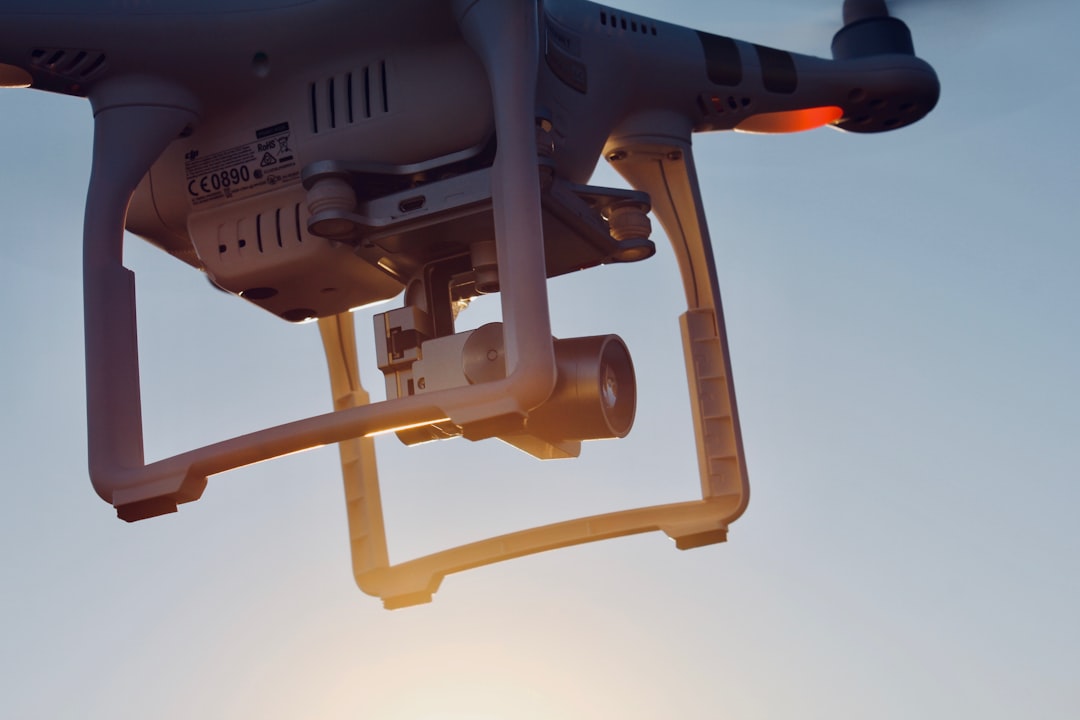
From Hobbyist Gadgets to Industrial Powerhouses
The journey of the drone, or unmanned aerial vehicle (UAV), is a classic tale of technological evolution. Its roots lie deep in military history, stretching back nearly two centuries in primitive forms, but its modern incarnation truly took flight in military applications around 2006. For a time, these sophisticated machines were the exclusive domain of defense and intelligence. Then, as with so many innovations, the technology miniaturized, the costs plummeted, and drones flooded the consumer market, becoming the must-have gadget for hobbyists and photographers. But that was just a pit stop. The real destination for drone technology was always something bigger. Today, we stand at the precipice of a new industrial age, one where drones are the vanguards of safety and efficiency. The global industrial drone market is experiencing explosive growth, with projections from markets and research firms indicating a leap from approximately $36.7 billion in 2024 to well over $44 billion by 2025, and some analysts predict the market could top $90 billion by 2030. This surge isn’t just about selling hardware; it’s about unlocking profound new capabilities within the framework of Industry 4.0, where automation, data, and artificial intelligence converge. Industries like mining, energy, logistics, and public safety are no longer just experimenting with drones—they are integrating them into the very fabric of their daily operations.
This rapid adoption has been fueled by a perfect storm of technological advancement and regulatory evolution. Innovations in battery life, sensor technology, and autonomous navigation have made drones more capable and reliable than ever before. Simultaneously, aviation authorities in several leading countries are beginning to relax the once-ironclad restrictions on flying drones “beyond visual line of sight” (BVLOS). This regulatory shift is a game-changer. It means a drone can now be dispatched from a central control room to inspect miles of pipeline, survey a vast agricultural expanse, or monitor a remote substation, all without a human pilot needing to keep the aircraft in their direct view. This opens a vast new horizon of applications, transforming the drone from a short-range tool into a long-range, autonomous industrial asset.
The New Frontier of Safety: Keeping Humans Out of Harm’s Way
At its core, the most compelling argument for industrial drones is a human one. Every year, workers in sectors like mining, construction, and utilities are injured or killed performing tasks that are inherently dangerous. Drones offer a powerful alternative, an extension of human senses that can venture into places where people should not. They are becoming the unsung heroes of workplace safety, creating a buffer between personnel and peril.
A Miner’s Best Friend
Imagine a sprawling open-pit mine, a gargantuan scar on the landscape where temperatures can swing from scorching heat to bitter cold. Before drones, tasks like surveying the site, inspecting the stability of a highwall after a blast, or calculating the volume of ore stockpiles were labor-intensive and fraught with risk. A survey team might spend days on foot, navigating treacherous, uneven terrain. An inspector would have to get dangerously close to a potentially unstable rock face. Now, that entire paradigm has shifted.
“We used to send a two-man team on foot to survey that cliff face. It took all day and was frankly dangerous,” explains a hypothetical mine safety manager. “Now, a drone equipped with a LiDAR sensor does it in 30 minutes, and we get a centimeter-accurate 3D model that’s a hundred times more detailed than anything we could gather before. Our people are safe in the control room, and we make better decisions because we have better data.”
Drones can be dispatched multiple times a day, equipped with a suite of payloads to gather comprehensive intelligence. High-definition cameras capture visual data, thermal cameras can detect unseen fissures or overheating equipment, and magnetometers can assist in geological mapping. After a controlled blast, a drone can be in the air within minutes, providing an immediate assessment of the results and clearing the area for workers to re-enter, dramatically reducing operational downtime and eliminating the guesswork that once defined such procedures.
First Responders’ Advance Guard
In the world of emergency services, time is the most critical variable, and information is its currency. Drones provide both. When a call comes in—be it a wildfire, a major traffic collision, or a search and rescue mission for a lost hiker—a drone can often be on the scene far faster than human responders. It acts as an advance scout, a tireless eye in the sky that provides invaluable situational awareness.
The View Through the Smoke
In a wildfire, manned aircraft are invaluable but are often restricted by altitude and visibility. Smoke can create a blinding curtain, hiding the fire’s true behavior. A drone, however, can fly lower and slower, using sophisticated thermal imaging to see right through the smoke. It can identify the hottest parts of the fire front, pinpoint spot fires that have jumped containment lines, and track the blaze’s movement in real-time. This data, streamed directly to the incident command center, allows fire chiefs to allocate resources—crews, engines, and water-dropping helicopters—with tactical precision, protecting both lives and property more effectively. It’s a level of intelligence that was simply unattainable a decade ago.
Beyond the Yellow Tape
Law enforcement agencies are also rapidly embracing drone technology, with a 2020 study by the Center for the Study of the Drone at Bard College finding that at least 1,578 state and local police, sheriff, fire, and emergency services agencies in the U.S. have acquired drones. These are not tools of mass surveillance, but precision instruments for specific tasks. For accident reconstruction, a drone can create a perfect, to-scale 3D map of a crash scene in minutes, allowing roads to be cleared faster. During a hostage situation or a standoff, a drone can provide a safe, aerial perspective of a building, identifying entry points and tracking a suspect’s movement without putting an officer in the line of fire. In search and rescue operations over dense forests or rugged mountains, a drone with a thermal camera can spot a human heat signature that would be completely invisible to a ground team.
The Engine of Efficiency: Redefining Productivity with Autonomous Flight
While safety is a paramount benefit, the economic and operational efficiencies driven by drones are what propel their adoption in the corporate world. By automating data collection and performing tasks faster, more frequently, and with greater accuracy than traditional methods, drones are delivering a staggering return on investment across numerous sectors.
The Precision of the Digital Surveyor
Consider the task of inspecting critical infrastructure. A bridge, a wind turbine, or a cellular tower all require regular inspections to ensure their structural integrity. Historically, this meant dispatching a team of highly trained (and highly paid) specialists, often equipped with climbing gear or expensive heavy machinery like cherry pickers. The process was slow, costly, and carried inherent safety risks.
Today, a single drone operator can accomplish the same task with far greater efficiency. The drone can autonomously follow a pre-programmed flight path, capturing thousands of high-resolution images of every bolt, weld, and surface. AI-powered software then stitches these images together to create a “digital twin” of the asset—a meticulously detailed 3D model. The software can then automatically flag potential issues: a tiny crack in a concrete pillar, a spot of corrosion on a steel beam, or a damaged blade on a wind turbine. This proactive approach to maintenance allows companies to address small problems before they become catastrophic failures, saving millions in potential repair costs and preventing service disruptions.
Logistics and Agriculture in the Sky
The revolution extends to nearly every corner of the economy. In agriculture, drones equipped with multispectral sensors fly over vast fields, analyzing the light reflected by crops. This data reveals subtle variations in plant health, allowing farmers to apply water, fertilizer, or pesticides with pinpoint accuracy—a practice known as precision agriculture. This not only increases crop yields but also significantly reduces the environmental impact by minimizing chemical runoff.
Counting Every Kernel
The level of detail is astonishing. An agricultural drone can differentiate between healthy and stressed plants, identify pest infestations, or spot irrigation system malfunctions long before they would be visible to a farmer on the ground. This data-driven approach transforms farming from an art based on experience to a science based on real-time analytics, ensuring a more sustainable and productive food supply for a growing global population.
Inspecting the Unreachable
For utility companies, drones are a godsend. Inspecting hundreds of miles of high-voltage power lines that cross remote, often inaccessible terrain was once a monumental undertaking, often requiring expensive helicopter flights. Now, a long-range BVLOS drone can autonomously patrol these corridors, using thermal and corona cameras to detect failing insulators or overheating connections before they lead to a power outage, saving utility providers millions and ensuring reliable service for customers.
The Brains Behind the Blades: The Tech Stack Making It All Possible
The drone itself, the physical aircraft with its rotors and frame, is only part of the equation. Its true power is unlocked by an integrated ecosystem of advanced technologies working in perfect harmony. This digital foundation is what transforms a flying camera into an intelligent, autonomous industrial tool.
The Unbroken Connection: Beyond Line of Sight
For a drone to operate effectively over long distances (BVLOS), its connection to the operator or control system must be flawless. Traditional Wi-Fi is insufficient for these missions; its range is limited, and its signal can be easily disrupted. As a network becomes congested, the “handover” between different access points can lag, causing a drone’s data stream to freeze or, in a worst-case scenario, leading to a complete loss of control. The solution lies in a multi-layered approach to connectivity. Modern industrial drone platforms integrate a mix of technologies, primarily leveraging the robust and ubiquitous nature of public and private 4G and 5G cellular networks. These networks are designed for seamless handovers at high speeds, ensuring the drone maintains a constant, reliable data link, much like a smartphone holding a call while you drive down the highway. This redundancy is the bedrock upon which all advanced drone operations are built.
Thinking at the Edge: Real-Time Intelligence
Sending massive streams of high-definition video and sensor data back to a distant cloud server for processing is inefficient. The latency—the time delay—can render the information useless for time-sensitive decisions. This is where edge computing comes in. Instead of sending raw data, powerful processors located either on the drone itself or at a nearby ground station analyze the information in real-time.
The AI Co-Pilot
This is where artificial intelligence and machine learning truly shine. The AI can be trained to recognize specific anomalies. For example, sensor data indicating an unusual vibration or a rise in temperature on a piece of machinery could automatically trigger a drone to fly to the site and inspect the equipment. An AI analyzing a video feed of a security fence could autonomously detect a breach and immediately alert the security team, sending them a live video of the intrusion. This “AI co-pilot” filters the noise, identifies what’s important, and provides actionable intelligence, not just raw data. It allows human operators to manage fleets of drones, focusing on exceptions and emergencies rather than manually monitoring every second of every flight.
Navigating the Headwinds: Challenges and the Road Ahead
Despite the immense promise and rapid progress, the path to ubiquitous drone integration is not without its obstacles. The regulatory landscape, while improving, remains a complex patchwork of rules that can vary dramatically from one country—or even one state—to another. Gaining approval for complex operations like BVLOS flights still requires a rigorous safety certification process. Furthermore, public perception remains a significant hurdle. Concerns about privacy and the potential for misuse are valid and must be addressed through transparent policies and robust security measures to prevent drones from being hacked or commandeered. Finally, the initial investment in building a full-scale industrial drone program—including the hardware, software, connectivity, and pilot training—can be substantial, representing a significant barrier to entry for smaller companies.
However, the momentum is undeniable. As the technology matures, costs will continue to fall, and regulatory frameworks will become more standardized. The drones of tomorrow will be even more autonomous, more intelligent, and more deeply integrated into the digital nervous system of industry. They represent a fundamental shift, moving us away from a model of manual inspection and reactive maintenance toward a future of automated monitoring and predictive analysis. The unblinking eye of the drone is not just watching over our industries; it is actively reshaping them, creating a safer, smarter, and more efficient world, one autonomous flight at a time.
Source: https://www.techradar.com



0 Comments