

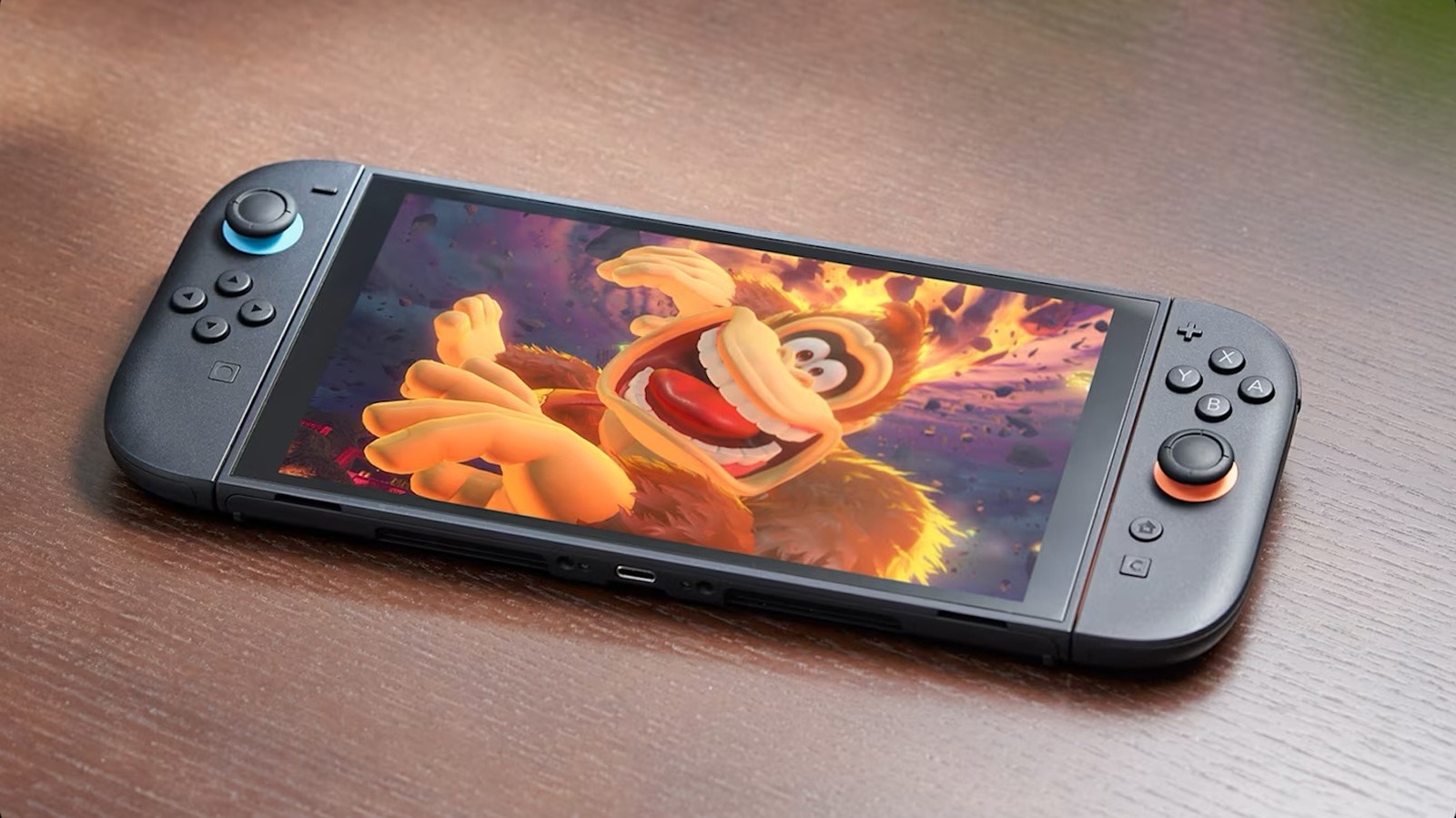
The Nintendo Switch 2 is the new generation of the popular hybrid console, which—like its predecessor—combines the functionality of a portable and home gaming system. Officially released on June 5, 2025, the new model immediately caught the attention of gamers with its improved specs, modern design, and enhanced user comfort.
Switch 2 retains the signature modular design, with the main unit featuring a 7.9-inch LCD display at its core. The new Joy-Con 2 controllers can be attached to the sides or used wirelessly. Unlike the first-generation model, the new Joy-Cons use magnetic attachments instead of mechanical locks, significantly improving convenience and durability. Additionally, Hall effect sensors have been implemented in the joysticks to eliminate the infamous “drift” issue from the previous model.
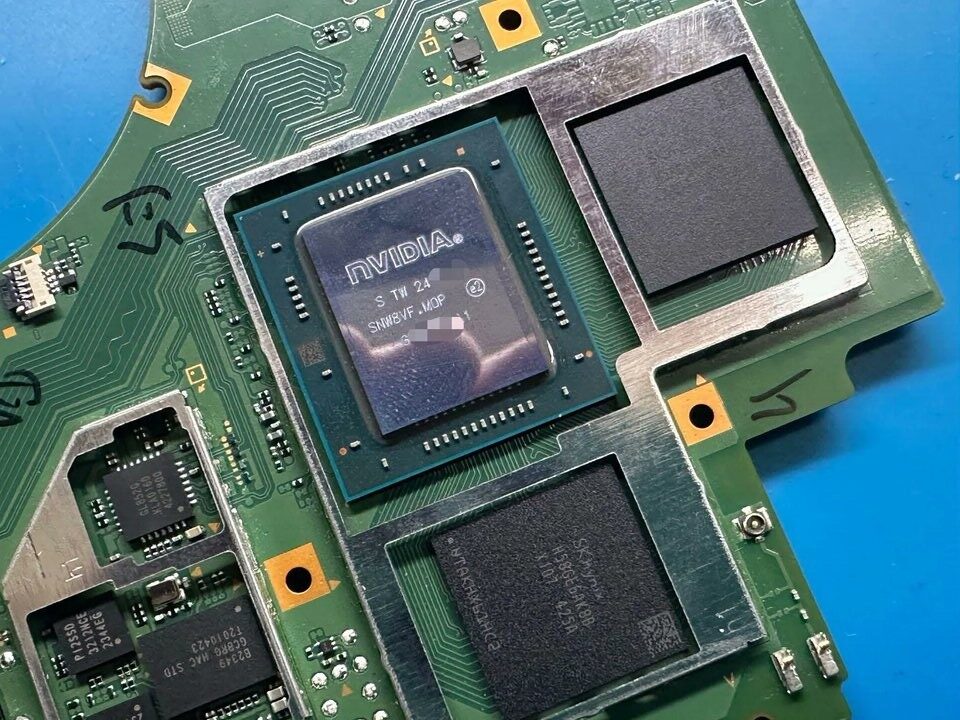
The new console runs on the NVIDIA Tegra T239 (codename “Drake”) – an octa-core ARM Cortex-A78C processor paired with an Ampere-architecture GPU. Backed by 12 GB of LPDDR5X RAM (128-bit interface), it offers performance comparable to 8th-generation consoles (PlayStation 4 / Xbox One), with added features such as DLSS (Deep Learning Super Sampling) and ray tracing. This enables rendering at 1080p on the console screen and up to 4K on external displays (via HDMI 2.1 dock output), while maintaining power efficiency and stable operating temperatures.
Priced at around €470, the system comes with 256 GB of fast UFS 3.1 storage, expandable via microSD Express, and is compatible with most first-gen Switch controllers – including the Switch Pro Controller. Also included is a redesigned dock with active cooling, an HDMI 2.1 port, gigabit Ethernet, and four USB-C ports, two of which are dedicated to controller charging.
The console’s LCD screen, provided by Sharp (a Nintendo partner since 2023), is not OLED but delivers high image quality, HDR10, wide viewing angles, and up to 120 Hz refresh rate. This makes it great not only for fast-paced games but also for multimedia content.
Ergonomic Improvements
The new Joy-Con wrist strap includes an extra button and rail system. The console also supports NFC (for Amiibo), Wi-Fi 6, and Bluetooth, leading to faster updates, lower latency in online games, and better integration with other devices.
Switch 2 runs on Switch OS 2.0, offering a simplified resource manager, a redesigned UI, and full integration with Nintendo Switch Online. This gives users access to classic features like cloud saves and retro games, along with new social tools and controller-integrated voice chat.
| Category | Details |
| Processor | NVIDIA Tegra T239 (8-core ARM Cortex-A78C) |
| Graphics | Ampere GPU (12 SMs), supports DLSS and ray tracing |
| RAM | 12 GB LPDDR5X (128-bit) |
| Display | 7.9″ LCD, 1080p, HDR10, up to 120 Hz refresh rate |
| Storage | 256 GB UFS 3.1, expandable via microSD Express |
| Controllers | Joy-Con 2 (magnetic mount, Hall sensors), supports Pro Controller |
| Ports & Connectivity | 4x USB-C, HDMI 2.1 (dock), Wi-Fi 6, Bluetooth, NFC |
| Compatibility | Backwards compatible with 2017 Switch games and some accessories |
| Price (approx.) | €470 (depending on region and bundle) |
| Link | Nintendo Switch 2 |
Chassis and Design
Switch 2 maintains the hybrid concept but introduces noticeable improvements in build quality and ergonomics. The core unit with the display and detachable Joy-Cons has been redesigned for greater durability, modern aesthetics, and better comfort.
- Materials: The body is made from high-quality glass-fiber-reinforced polymer, offering solid rigidity with low weight. The back is slightly textured for a secure grip, and the matte finish minimizes fingerprints and scratches.
- Size and Feel: The Switch 2 is slightly larger due to the 7.9″ screen, but still retains a slim profile. Revised edge geometry enhances in-hand comfort—especially during long play sessions.
Ports and Cooling
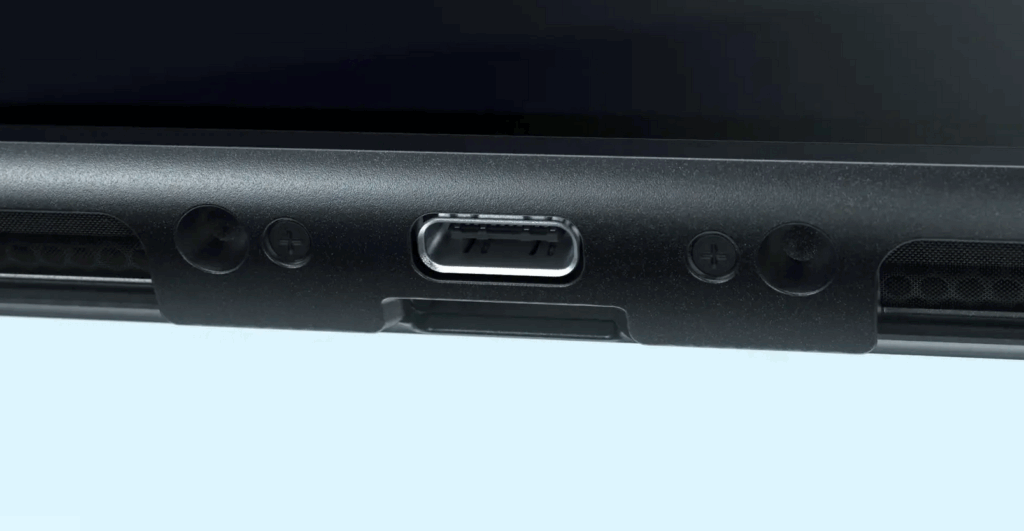
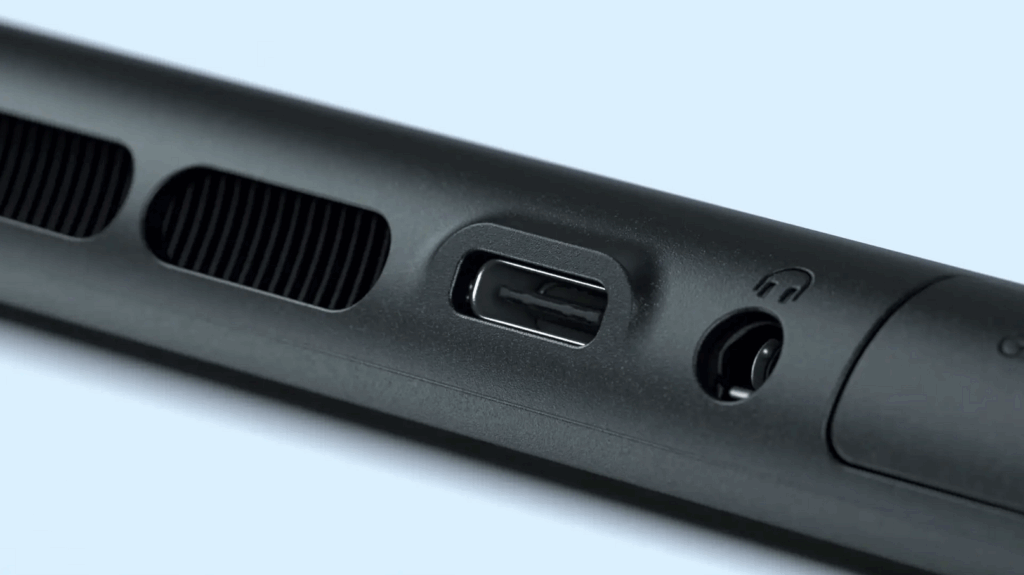
On the main console body:
- 1x USB-C port (for charging, dock communication, and accessories like headphones or adapters)
- Cartridge slot
- microSD Express slot (improved dust protection and durability)
- Enlarged rear vent for the new active cooling system, especially effective in docked mode
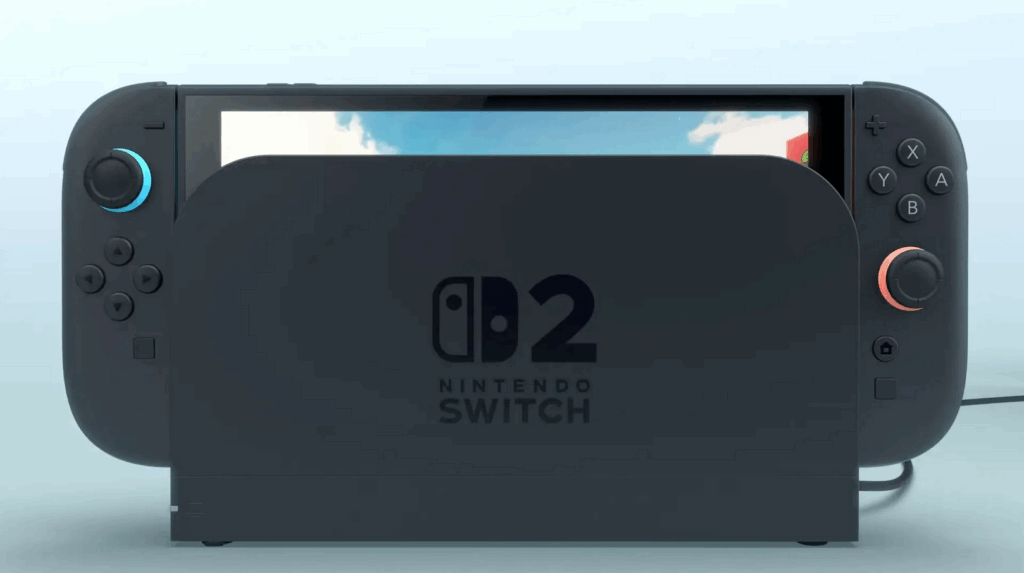
Dock (Nintendo Switch 2 Docking Station)
The redesigned dock includes:
- 3x USB-C ports
- 2 for charging/pairing Joy-Con 2 or Pro Controller 2
- 1 for future accessories or expansions
- 1x HDMI 2.1 port (up to 4K output with DLSS)
- 1x Ethernet port (for stable wired internet)
- Power input (charges console and powers dock)
The new dock has additional ventilation and a revised cable management system. A redesigned rail system helps users dock the console smoothly and safely.
Internal Hardware
Under the hood, the Switch 2 houses advanced components optimized for both performance and efficiency.
Wi-Fi 6, Bluetooth 5.3, and NFC modules for better speed, reliability, and accessory support
SoC: The Tegra T239 “Drake” chip provides significantly higher performance than the previous model, with architecture optimized for power savings.
Graphics: The Ampere-based GPU with 12 SMs allows for realistic lighting effects (ray tracing) and DLSS upscaling, previously unseen on Nintendo hardware.
Memory & Storage:
High-speed LPDDR5 RAM for smooth multitasking
Internal NVMe SSD, drastically reducing game and system load times.
Thermal Design:
Optimized fan with improved airflow
Quiet operation and thermal stability under load, preventing performance throttling
Performance and User Experience
Switch 2 represents a major leap in performance compared to its predecessor. With the Ampere-based SoC, the console matches the capabilities of 8th-gen systems like the PS4 or Xbox One—while staying compact and mobile.
- Gaming Performance:
The combination of the ARM Cortex-A78C CPU and Ampere GPU enables smooth gameplay in high resolutions with more visual fidelity. DLSS allows low-res rendering with upscaled visuals, improving performance without compromising quality. - Ray Tracing:
Enables dynamic lighting and shadows, especially in docked mode where power isn’t a constraint. - Portable vs. Docked:
In handheld mode, the console automatically reduces clock speeds to extend battery life and reduce heat. In docked mode, power limits increase, resulting in better graphics and frame rates. - Noise and Heat:
The new cooling system keeps fan noise low and temperatures comfortable—even during intense gaming.
Conclusion
Nintendo Switch 2 is a well-thought-out evolution of one of the best-selling consoles in history. It delivers clear improvements in performance, visual fidelity, and hardware design, addressing many of the complaints about the original Switch.
Pros:
- Significant performance boost
- DLSS and ray tracing support
- Redesigned Joy-Cons with better ergonomics
- Quieter, more efficient cooling
- Backward compatibility with games and controllers
- Upgraded dock with HDMI 2.1 and better thermal management
Cons:
- Slightly larger and heavier in portable mode
- No OLED screen in the base version
- Conservative design evolution (may feel too familiar to some)
Final Score: 4.8/5
Nintendo Switch 2 is a worthy successor. While it retains the DNA of the original, nearly every aspect has been refined—from the new Ampere-based SoC and updated Joy-Cons to the better dock and cooling system.
It delivers a genuine generational leap: better performance, ray tracing, DLSS, faster memory, Wi-Fi 6, and improved user comfort. While the LCD might not dazzle like OLED, the trade-off between cost and availability seems justified. With its backward compatibility and competitive price, the Switch 2 is poised for strong commercial success.
0 Comments