

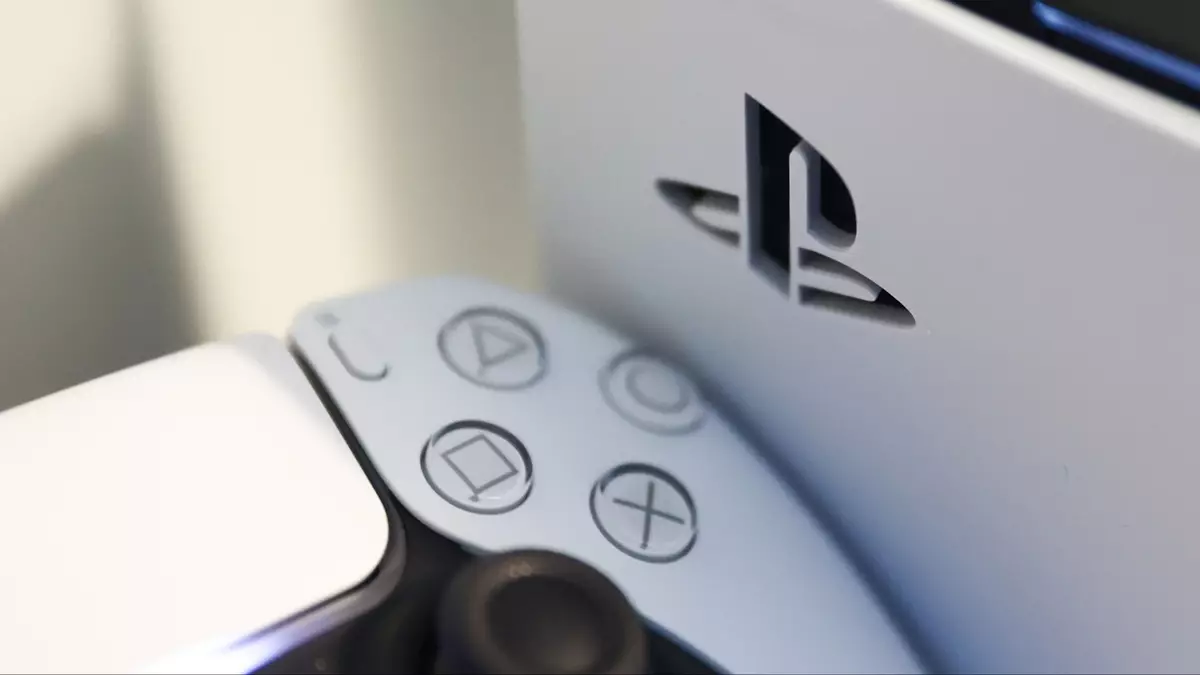
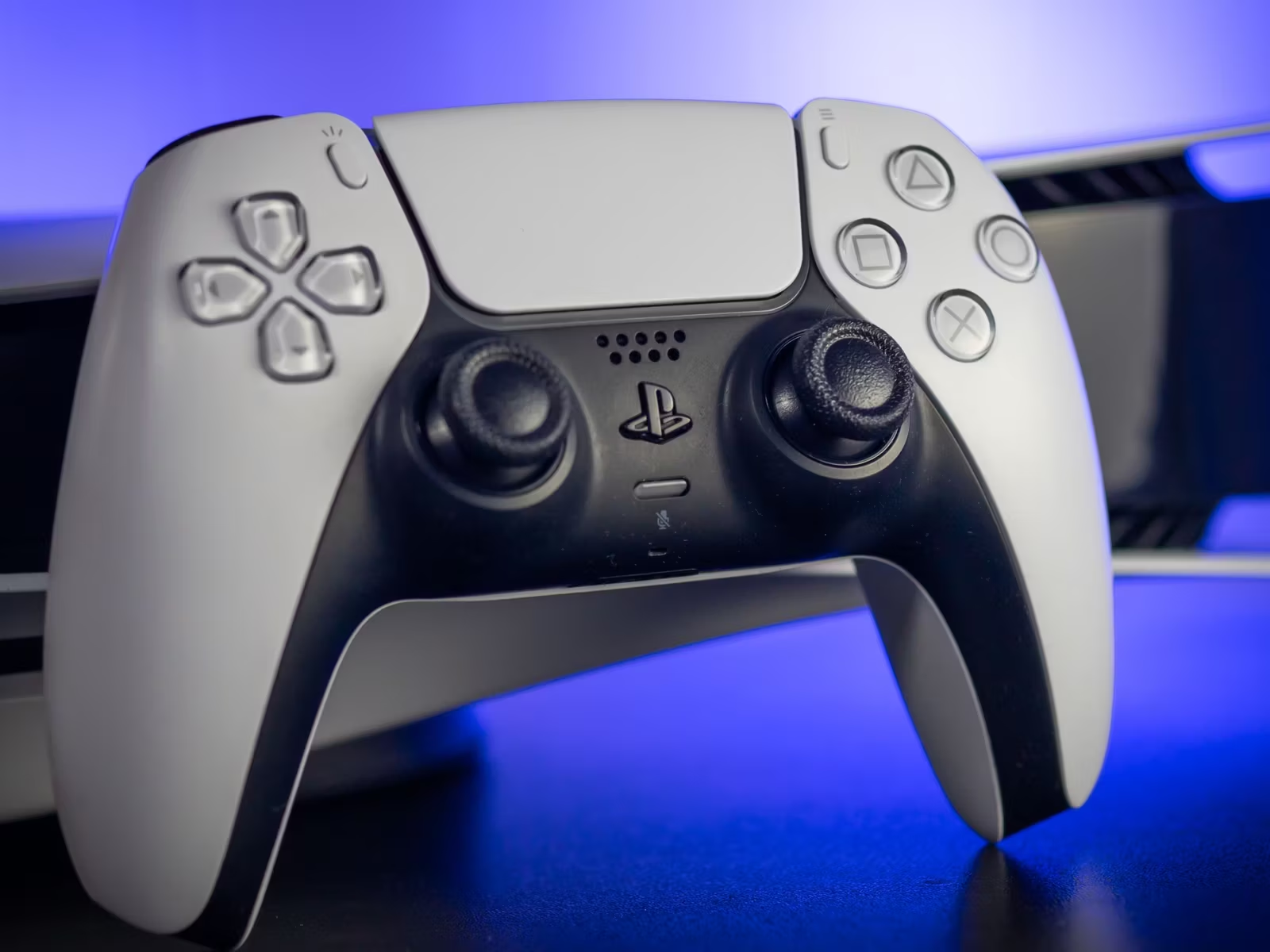
The PlayStation 5’s DualSense controller arrived in late 2020 with game-changing features, and five years on it remains a key part of Sony’s ecosystem. Its two-tone design and chunky grip set it apart visually, while innovations like haptic feedback, adaptive triggers, a clickable touchpad, motion sensors, and a built-in microphone brought new “haptic gaming” possibilities. At launch, Sony’s engineers highlighted how DualSense “adopted haptic feedback” to add “variety of powerful sensations” (e.g. feeling mud under a car tire) and put adaptive triggers on the L2/R2 buttons so actions like drawing a bow “truly feel the tension”. The controller also includes a large touchpad for additional input and a 3D audio-ready speaker. These features aimed to make the controller an extension of the game world itself.
- Haptic Feedback: DualSense uses advanced dual-actuator motors instead of simple rumble. Gamers feel subtle vibrations and textures – from the rumble of distant explosions to the gritty feel of walking through sand – adding realism that players still praise today.
- Adaptive Triggers: Each face trigger can vary its resistance on demand. For example, pulling a virtual bow or squeezing a car pedal will push back on your finger, immersing you in the action. Many current games (like Spider-Man 2 and Returnal) exploit this to differentiate weapons and tools.
- Built-in Microphone: A headset-free chat option via an onboard mic array. (For longer sessions players can still plug in a headset.) The DualSense also keeps the share/create button (now renamed “Create”) for streaming and captures.
- Touchpad & Motion: The large touchpad (inherited from the DualShock 4) offers extra input area for menus or gestures, and gyroscope/accelerometer motion sensing enables tilt controls. These continue the motion-control capabilities of the PS4 era, giving developers more ways to use the controller.
Each of these innovations stood out at launch. Astro’s Playroom – a tech demo bundled with PS5 – was built to highlight DualSense’s capabilities. Its lead developer notes that “the DualSense controller really brought something special” to PS5, and the team experimented with simulating the feeling of “pulling something, cracking something, or crushing something” using the adaptive triggers and haptics. In short, the DualSense gave players an unprecedented tactile connection to games.
Hardware and Software Updates to DualSense (2023–2026)
Since launch, DualSense has seen modest revisions and software enhancements to improve its longevity and flexibility. Sony has refined the hardware and added new firmware features, though the core design remains largely the same.
On the software side, a PS5 system update in mid-2025 introduced multi-device pairing. The DualSense (and DualSense Edge) can now remember up to four different devices at once – for example, your PS5, a Windows PC, a Mac, and a smartphone. By pressing PS + a face button combo, players can seamlessly switch the controller between these devices without re-pairing each time. This lets you, say, quickly switch from PS5 gaming to Remote Play on mobile, or back to PC gaming, with just a button press.
Hardware-wise, Sony quietly rolled out a revised DualSense model (CFI-ZCT2W) in 2025 that fixes one of the biggest early complaints: short battery life. Modders found this new DualSense uses a more efficient internal board (BDM-060) and a slightly tweaked battery. Real-world tests showed it delivered “over 15 hours” of playtime – “crushing” the older controllers’ endurance. To get this boost, Sony reportedly removed the secondary (rear) microphone from the controller. Tech teardown reports confirm the new DualSense (sometimes called “DualSense V2” or “V3”) still has the same battery capacity, but improved charging circuitry and insulation for cooler operation. Notably, it does not have a user-removable battery like an Xbox pad; the update focused on power efficiency, not swap-and-go design.
As of late 2025, this revised DualSense ships with the newest PS5 Slim and PS5 Pro consoles and in special editions. In short, Sony achieved longer playtime and lower heat without changing the core feel – the biggest change under the hood was simply dropping the extra mic and tightening up the internals. For enthusiasts, Sony also launched the DualSense Edge high-end controller in 2023, which adds swappable sticks, trigger locks, and remappable back buttons (similar to Xbox Elite) – but again it uses the same basic haptic/trigger technology.
In-Game Immersion: How Developers Use DualSense Today
In 2026, many game studios continue to leverage DualSense’s capabilities to deepen immersion. The popularity of this “haptic gaming” drive is evident in both big-budget and indie titles. For example, the upcoming Lost Soul Aside (2025) will support full DualSense integration on both PC and PS5. Ultizero Games confirmed that each weapon and mechanism has unique trigger resistance curves, and haptic feedback is “precision-tuned” for every clash, shot, and impact. This means whether you swing a sword or fire a blaster, you literally feel the weight and recoil through the controller. Likewise, developers of Ghost of Yōtei (the Tsushima sequel) and many others have noted that subtle vibrations and trigger tension can convey game-world details that visuals alone cannot.
PlayStation’s own first-party teams remain some of the most vocal proponents. The Astro’s Playroom dev team – often credited with defining the DualSense’s magic – stresses that these features make the console feel “special”. Team Asobi director Nicolas Doucet explains that moving from PS4 to PS5 was less about raw graphics and more about new sensory experiences: “the PS5, between the DualSense and the SSD, really brought something special”. He points out that for many games, the difference isn’t obvious in visuals, so you “have to get [the controller] in your hands and get a feel for it” to notice the leap.
Overall, major releases routinely include DualSense support now. Top PS5 titles like Spider-Man 2, Resident Evil 9, and Gran Turismo 8 use adaptive triggers for unique weapon handling or driving physics. Indie games too see it as a standard feature – designers often advertise DualSense support on store pages. As a PC accessory, support is growing; titles on Steam like Genshin Impact or Cyberpunk 2077 recognize the controller natively. (On PC, some advanced features may require wired connection or may not work on all platforms – see below.) In short, the DualSense remains a strong selling point: studios talk about how its haptics and triggers allow them to “simulate pulling something, cracking something, or crushing something” in-game, enriching player connection.
Player Feedback: What’s Lasted and What’s Lagging
Among players, the DualSense still garners plenty of praise – but also some perennial gripes. On the plus side, immersion via haptics and triggers consistently ranks high. Gamers still talk about small details (like feeling raindrops or engine rumble) that only DualSense’s technology can deliver. Many say the new features set the PS5 generation apart: if someone asks a year from now what made the PS5 unique, responses often include “the DualSense and how games feel in my hands”. In short, the core innovations have held up very well for immersion and are heavily used in current titles.
However, not everything has aged perfectly. The analog stick drift issue remains a sore point. Many players have experienced drift (unintended movement) after months of use, and Sony’s mid-gen refreshes have not fully solved it. A 2025 report notes stick drift “remains a sore point” even as battery woes improved. Battery life itself was originally another weakness: early DualSense units often lasted only 6–8 hours and became weaker over time. (Owners frequently needed to recharge or even buy secondary chargers.) While the revised 2025 model does dramatically boost runtime, that hardware arrived only with new consoles, so earlier controllers never benefited.
Another mixed reception is that not all games use the DualSense to its fullest, making it feel gimmicky in some cases. Some players who prefer flat gameplay even disable haptics or use a headset mic instead of the built-in one. To Sony’s credit, the PS5 includes accessibility options: players can reduce or disable haptic feedback and adaptive trigger force in settings if the sensations are distracting. Ultimately, most fans still agree: the DualSense’s innovations have generally held up and continue to impress – the new feel is memorable – but battery longevity and hardware wear (and the lack of a swappable battery) are the chief complaints.
DualSense vs. Other Controllers
It’s hard to talk DualSense without comparing it to the Xbox Series X controller and others. The Xbox pad (Series X|S wireless controller) is ergonomically refined and uses easily replaced AA batteries or packs, but it does not have adaptive triggers or the DualSense’s intricate haptic motors. Xbox sticks and bumpers lack variable resistance, so on that front Sony’s controller remains unique. As Notebookcheck notes, many Xbox controllers let you swap batteries on the fly, whereas DualSense uses a sealed internal battery. On the flip side, Xbox’s layout (offset sticks) is preferred by some players, and its lighter weight can be more comfortable for long sessions. Third-party PlayStation controllers (like SCUF or Razer models) exist, but none replicate the DualSense’s trigger motors or built-in speaker array – they mostly offer remappable buttons and back paddles.
For PC gaming, both controllers work (via USB or Bluetooth), but feature support differs. Adaptive triggers and haptics can work on PC games, but often only when connected by USB or if the game explicitly supports DualSense. Sony’s support page notes that on Android or Mac, adaptive triggers and certain haptic effects are not compatible. In practice, many PC gamers use the DualSense as a generic controller and may forgo the fancy rumble if not fully supported. In any case, for PS5 gamers the DualSense is essentially the standard – it’s treated as a key part of the “PS5 accessories” ecosystem.
Accessibility and Non-Traditional Uses
Beyond console play, DualSense is finding roles in new contexts. One big area is Remote Play: you can stream PS5 games to a PC, smartphone, or the PS Portal handheld, and still use DualSense for input. This direction aligns with Sony’s broader accessibility and hardware experiments, including concepts like its buttonless adaptive controller patent, which explores fully customizable input surfaces for different user needs. Officially, Sony confirms that PS Remote Play on PC, Mac, and mobile devices works with a DualSense over USB or Bluetooth. In fact, the PS Portal remote player (a Wi-Fi handheld device released in 2023) uses DualSense wireless technology: Sony’s marketing emphasizes that you can “experience the full power” of DualSense haptics and adaptive triggers even while streaming over Wi-Fi. In short, the same tactile feedback travels over the network to your screen.
That said, some features remain platform-dependent. On Windows, most DualSense functions work (though wireless audio and chat may require a cable), but on macOS or Android many advanced features are limited. According to Sony’s support documentation, adaptive triggers are not available on Android devices, and full haptic feedback requires a USB connection on PC rather than Bluetooth. Likewise, the built-in microphone and speaker only function on Windows. So while you can pair a DualSense with a phone or tablet for casual gaming, you may not get the full experience unless you connect it physically.
Finally, DualSense’s design itself brings notable accessibility benefits. The controller is shaped to accommodate a wide range of hand sizes, and PS5 system settings allow button remapping as well as trigger resistance adjustments. Players can also reduce the intensity of haptic feedback if it feels overwhelming. Combined with the built-in microphone and quick chat mute button, DualSense lowers the barrier to entry for multiplayer gaming. In essence, Sony has positioned the controller as both powerful and flexible—whether you’re playing in the living room, remotely via Remote Play, or experimenting with alternative PlayStation input methods.
In summary, by 2026 the DualSense controller remains one of the PS5’s defining features. Its launch innovations—immersive haptics, adaptive triggers, and advanced input options—continue to impress developers and players alike. Ongoing hardware and firmware updates have improved battery life and usability without changing the core experience. While issues such as stick drift and early battery limitations are still discussed, they have not diminished the DualSense’s reputation as a radical and influential step forward in next-generation gaming immersion.
Sources: PlayStation press/blog releases


0 Comments