

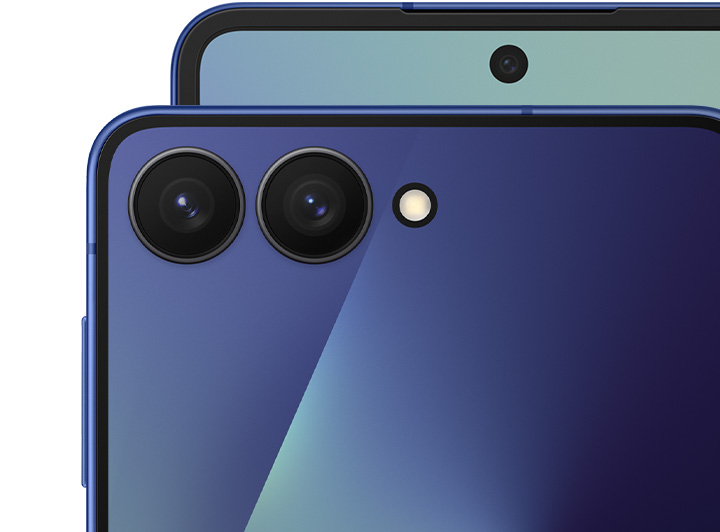
Samsung Galaxy Z Fold 7 – The Evolution of Foldable Smartphones at the Highest Level
The Samsung Galaxy Z Fold 7 is the most advanced foldable smartphone in the history of the Korean manufacturer. Although it may look similar to its predecessor on the outside, inside it hides significant changes that truly improve comfort of use, functionality, and overall user experience.
Slimness and Lightness That Surprise
The folded Galaxy Z Fold 7 measures just 8.9 mm in thickness, making it the thinnest Fold ever. For comparison, its predecessor – the Fold 6 – was 12 mm thick, and the original 2019 model was as thick as 17 mm. Even more impressive is the thickness when unfolded – only 4.2 mm, thinner than many tablets. The minimalist design did not prevent the inclusion of a full-sized USB-C port, and the device weighs 215 g – 24 g less than the Fold 6 and 61 g less than the original Fold.
Displays: Bigger, Brighter, More Comfortable
The new Fold offers two premium-class displays:
- The external screen is now a 6.5-inch Dynamic AMOLED 2X with a resolution of 2520 x 1080 pixels and a refresh rate of 1–120 Hz. Thanks to new 21:9 aspect ratio, typing with thumbs feels more natural.
- The internal screen is an impressive 8 inches, also Dynamic AMOLED 2X, with a resolution of 2184 x 1968 px and adaptive refresh rate of 1–120 Hz.
Samsung also changed the desktop layout – when unfolded, there are now two independent desktops you can easily switch between.
Durability and Premium Materials
The Galaxy Z Fold 7 uses several new materials:
- The back is covered with Gorilla Glass 2,
- The front is protected by Gorilla Glass Ceramic 2,
- The internal screen received a new, more durable flexible layer,
- The frame is made of reinforced aluminum combined with fourth-grade titanium.
The device meets IP48 standard, providing splash resistance, though dust protection is limited.
Top-tier Cameras
Samsung Galaxy Z Fold 7 finally drops compromises on cameras in the Fold line. It features:
- Main 200 MP camera (f/1.7), known from the Galaxy S25 Ultra, with 2x digital zoom,
- 10 MP telephoto lens with 3x optical zoom,
- 12 MP ultra-wide lens,
- Two 10 MP selfie cameras (one on each screen) with a 100° field of view – no longer hidden under the display.
Users can enjoy 10-bit HDR mode, night mode, and advanced multimedia editing directly on the unfolded screen – perfect for “before and after” photo comparisons.
Performance Without Compromise
Under the hood is the Snapdragon 8 Elite for Galaxy (3 nm), supported by:
- 12 GB RAM (expandable to 16 GB),
- Internal storage up to 1 TB,
- 4400 mAh battery with 25 W charging and support for wireless and reverse wireless charging.
The phone supports the latest connectivity tech: Wi-Fi 7, Bluetooth 5.4, 5G, eSIM/nanoSIM, NFC, GPS.
Next-Gen Software and AI
The Galaxy Z Fold 7 runs Android 16 with One UI 8.0. The system offers:
- Multimodal Galaxy AI,
- Integration with Google Gemini Live,
- Circle to Search tool from Google,
- AI assistant for transcription, translations, and photo editing.
Does the Galaxy Z Fold 7 Have Downsides?
Though impressive in many ways, it is not without flaws:
- No support for the S Pen, which had to be sacrificed for the slim design,
- Relatively slow charging – 25 W is a few years old standard,
- Price may be a barrier – the base model costs about $1,940, and the top variant (16 GB / 1 TB) around $2,340.
Samsung Galaxy Z Flip 7 – Style, AI, and Next-Gen Compact Display
The Samsung Galaxy Z Flip 7 is the latest iteration of the most popular foldable phone on the market. Though it resembles its predecessor on the outside, Flip 7 is primarily an evolution in functionality, AI, and daily comfort. It’s a phone that combines style with technology.
New Design, Familiar Form
The Z Flip 7 retains the iconic clamshell design but is slightly redesigned. The phone is marginally thinner and lighter than its predecessor:
- Thickness folded: 14.1 mm (vs. 15.1 mm in Flip 6),
- Thickness unfolded: 6.1 mm,
- Weight: 182 g.
A new hinge allows the screen to close completely flat, with no visible gap. The build is solid – front and back are covered with Gorilla Glass Victus 2, and the frame is reinforced Armor aluminum.
Flip 7 is also water-resistant (IP48), though like Fold 7, it does not have full dust protection.
Bigger External Screen, More Possibilities
The biggest novelty in Flip 7 is the new external FlexWindow display:
- Size: 3.9 inches,
- Type: AMOLED 60 Hz,
- Resolution: 748 x 720 px.
Thanks to the new format, users can access full-featured widgets, maps, messages, Spotify, or YouTube without opening the phone. Samsung also allows selected apps to run in mini versions (e.g., Gmail, WhatsApp), drastically changing the smartphone usage experience.
The main screen remains almost unchanged:
- Size: 6.7 inches,
- Type: Dynamic AMOLED 2X,
- Resolution: FHD+ (2640 x 1080),
- Refresh rate: adaptive 1–120 Hz.
What about the Galaxy Z Flip 7 FE?
The Flip 7 FE retains the smaller 3.4-inch Super AMOLED cover display with a resolution of 720 × 748 pixels and a refresh rate up to 120 Hz. While it supports basic widgets and camera previews, it lacks the expanded app compatibility and AI-driven mini apps available on the FlexWindow of the standard Flip 7. This means the Flip 7 FE offers fewer multitasking options on the cover screen compared to its flagship sibling.
Better Cameras and AI in Flex Mode
Samsung Galaxy Z Flip 7 focuses on improved optics supported by Galaxy AI. While the main camera remains 50 MP, it uses a new sensor with larger pixels and better dynamic range.
- Main camera: 50 MP f/1.8, OIS,
- Ultra-wide: 12 MP f/2.2,
- Selfie camera (internal screen): 10 MP f/2.4.
A novelty is FlexCam with AI, which automatically adjusts framing and tracks objects when the phone is partially folded. This makes Flip 7 a mini tripod – perfect for vlogging, video calls, or TikTok.
Performance and Longer Battery Life
The Galaxy Z Flip 7 is powered by the Snapdragon 8 Elite for Galaxy, the latest 3-nm SoC optimized by Qualcomm and Samsung, supported by:
- 12 GB RAM (up from 8 GB previously),
- Internal storage: 256, 512 GB, or 1 TB (UFS 4.0),
- Battery: 3900 mAh,
- Wired charging: 25 W (50% in 30 minutes),
- Wireless and reverse charging.
Increased battery capacity and a more power-efficient chip allow Flip 7 to run up to 20% longer on a single charge than its predecessor.
Android 16 and Galaxy AI Onboard
The phone debuts with Android 16 and One UI 8.0, offering many AI features, including real-time translations on the external screen, Live Transcribe and Live Translate in calls and chats, an AI photo editor with object shifting, quality enhancement, and removal of elements, a writing assistant suggesting message and social media post shortcuts, as well as Circle to Search for intuitive visual search in any context. These improvements build on Samsung’s broader interface evolution, especially the changes introduced with the One UI app drawer in Android 15.
Flip 7 also supports Galaxy Cloud Backup with AI, which intelligently optimizes backups, synchronization, and data usage.
Price and Availability
The Galaxy Z Flip 7 remains expensive but is still Samsung’s cheapest foldable:
- 256 GB version: approx. $1,210,
- 512 GB version: approx. $1,300,
- Top 1 TB version: approx. $1,410.
Available in six colors: black, white, pink, mint, blue, and a new “peach beige.”
Flip 7 Downsides – What Still Needs Work?
Although one of the most interesting smartphones of 2025, it is not without flaws. Samsung made great progress in performance, build quality, and AI features, but some design compromises are still noticeable—especially considering the high starting price.
Disappointingly, the internal screen’s durability remains a concern. While the new generation Ultra Thin Glass is more resistant to pressure and scratches than before, the foldable panel is still more fragile than traditional AMOLED screens. The crease is still visible under light and can be felt by touch, which might bother users when reading or watching videos.


0 Comments