

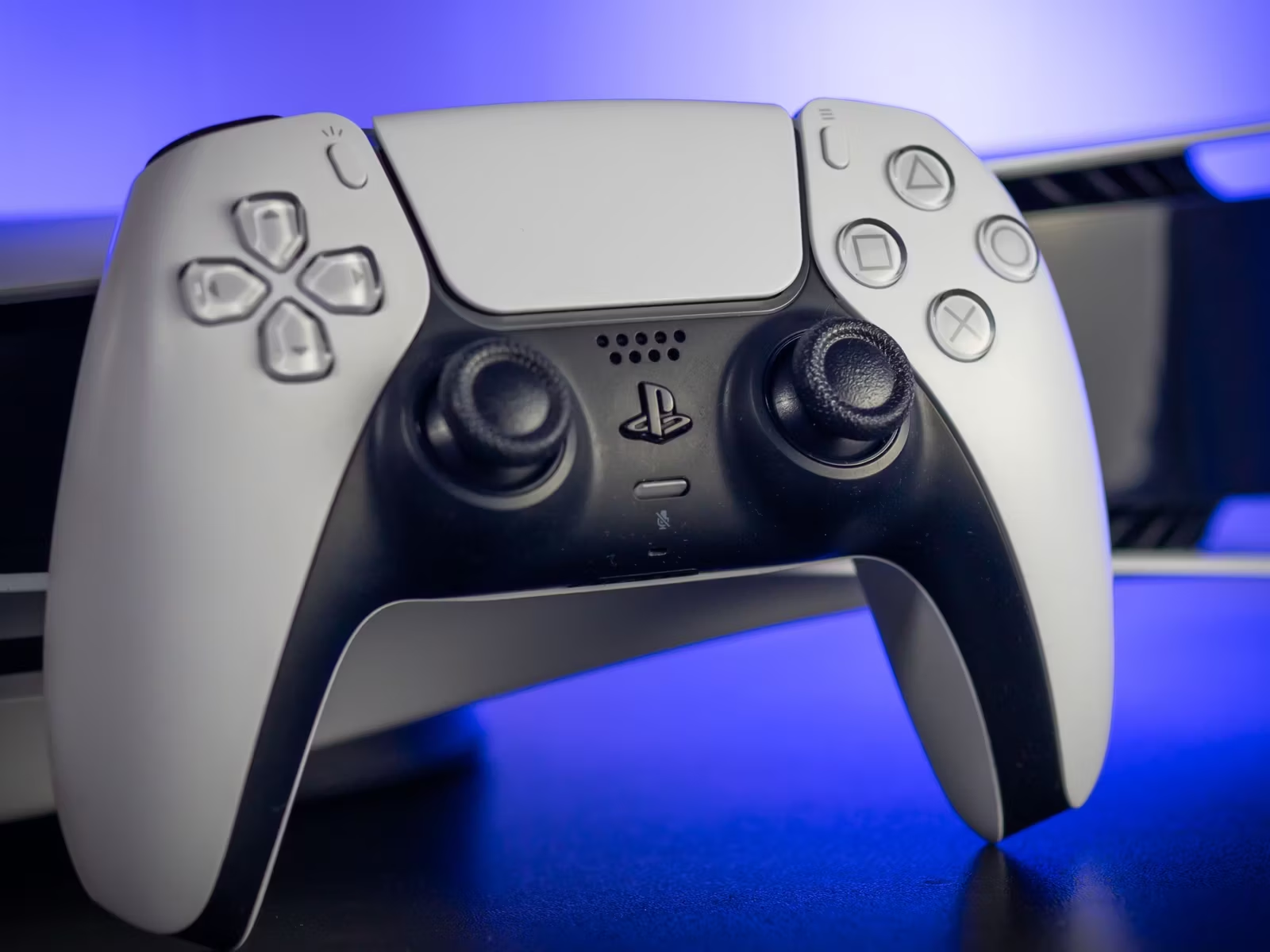
According to the patent, the Sony design replaces the traditional face buttons, D-pad and sticks with one or more flat capacitive touch panels. These panels would register inputs like a swipe, pinch or tap instead of a click. Importantly, the button layout itself is not fixed. The controller could generate virtual buttons anywhere on its surface, automatically moving or resizing them based on how the player is holding the gamepad. In essence, each player could define their own button scheme. The patent even emphasizes accommodating different hand sizes and grips – for example, the system can recognize a user’s hand position and reflow the control zones to be more comfortable. This implies that gamers with large hands or unique dexterity needs could scale or shift button clusters (even choosing offset vs. inline stick layouts) on the fly.
Key concepts of Sony’s adaptive controller patent include:
- Virtual Adaptive Buttons: Traditional face buttons and D-pad are replaced by software-defined “virtual” buttons on a touch surface. These can move freely and aren’t fixed in place.
- Touch Gestures: The controller would respond to touches, taps, swipes, pinches and slides across its surface. In other words, sliding a finger could substitute for pressing a button or moving a stick.
- Dynamic Layout: The device could automatically adjust control layouts to match the player’s grip. For example, if a player’s thumb rests in the middle of the pad, the home button layout might shift closer to that thumb.
- Accessibility Focus: Sony explicitly notes that fixed layouts can make standard controllers “too large or too small” for some users. This design is aimed at inclusivity, allowing configurations that suit various physical needs.
- Custom Profiles: Players would likely be able to save and recall custom control profiles. (Sony’s current PS5 accessibility kit, Project Leonardo, already lets users store up to three button-mapping profiles, hinting that profile switching could be built into future hardware.)
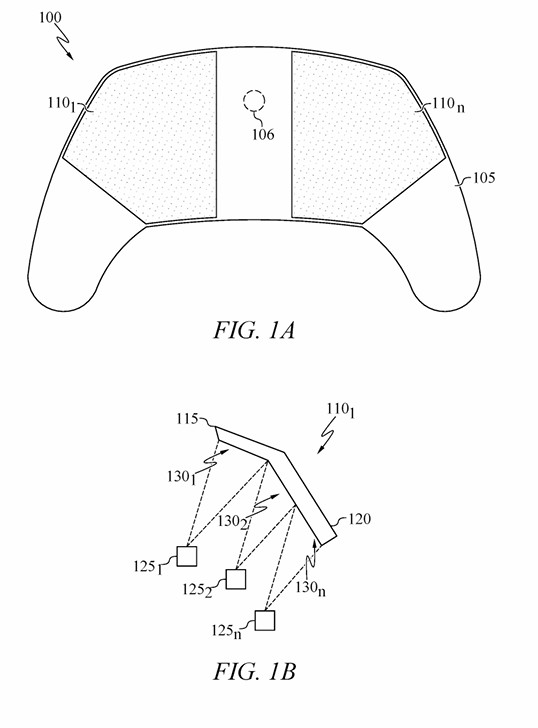
In practice, the patent illustrations show a pad with no fixed keys – instead, the entire face is a configurable touchscreen. For instance, a button press might be detected by a tap or swipe rather than a mechanical click. The system may also use optical or proximity sensors to sense when fingers approach the surface, possibly lighting up different control regions in anticipation. All input detection (touch, swipe, pinch, etc.) happens on a flat panel, as if the controller were a gamepad-version of a smartphone touchscreen. This is similar in spirit to how the PS5 DualSense’s touchpad already recognizes swipe and pinch gestures during games, but greatly expanded.
Importantly, Sony’s patent focuses on versatility. It envisions a controller that can combine multiple control schemes on one side and even change the size of button areas to fit a player’s hand (for example, making buttons larger for easier pressing). In effect, the hardware adapts to the user, not the other way around. Profiles for different games or users could be auto-loaded (the patent hints at identifying the player) so that each person’s favorite layout appears when they pick up the pad.
Accessibility and Customization
Sony’s move clearly continues its recent emphasis on accessibility. Beyond the patent, Sony has already introduced Project Leonardo – a PS5 controller kit with swappable components and software profiles designed for players with disabilities. Leonardo lets users map buttons and save up to three control profiles on their console, illustrating that Sony values personalized control schemes. The new patent takes this concept further by baking the customization into the controller hardware itself. Instead of plugging in external switches (as with Microsoft’s Adaptive Controller), Sony’s idea is to let the controller itself morph to the player’s needs in real time.
For example, a player with limited hand mobility could stretch out a single control surface to cover the D-pad and face buttons in one region, then shrink it for left/right triggers elsewhere. Another player might prefer all face buttons arranged in a tight cluster near their right thumb, or the analog stick detented to the left side – and the controller could display exactly that layout. Because the pad is touch-sensitive everywhere, no physical reconfiguration is needed. All of this could benefit gamers with differing dexterity or strength levels, as well as setups for wheelchairs or custom mounts.
Potential Reception and Challenges
While innovative, this design is not guaranteed to please all gamers. Reaction is likely mixed. NotebookCheck points out that even savvy mobile-gamers “prefer the feel of sticks and buttons” when given the choice. In online forums, many players insist on physical feedback for accuracy and confidence. Critics argue that without some tactile guide (the click or “bump” of a real button), users might lose precision or comfort in fast-action games. (For example, the Victrix Pro BFG is a professional controller that allows physically adjusting stick positions and button count – features some players already adopt rather than giving up physical buttons.)
Conversely, supporters note that younger players are already accustomed to touch-based input from smartphones and tablets, and advanced haptics could simulate button feels. Indeed, today’s DualSense controller already blends touch and feedback – its center pad recognizes gestures while triggers and speakers provide realistic sensations. Sony could combine this new patent’s ideas with proven tech: perhaps a dual-mode controller that keeps some physical triggers for those who want them, or at least provides strong haptic “clicks” on the flat surface. In the patent, Sony even suggests this style of pad might be used as an alternative model specifically for accessibility-minded users, rather than replacing the standard controller for everyone.
It’s also important to note: patents often explore far-future concepts that may never be commercialized. As Sportskeeda cautions, the buttonless controller is “in the early stages of research, and there are no confirmed reports” on releasing it with PlayStation 6. Insider Gaming likewise notes that while the patent is intriguing, “there’s no way to know whether this controller patent will be realized”. Sony files many patents as thought experiments – for example, it has also looked at hydraulic trigger systems and even sweat-detecting gamepads – but only some ideas reach store shelves.
In summary, the patent reveals a bold vision: a PlayStation controller with fully configurable, touch-only controls that adapt to each user. If realized, it could offer unprecedented customization and accessibility. However, traditionalists may balk at losing physical buttons, and practical hurdles remain. For now, it’s a glimpse into Sony’s research and how future gamepads might evolve.
Sources: Sony’s patent filings and coverage (Insider Gaming; Tech4Gamers; NotebookCheck),


0 Comments