

—
The New Apex Predator of Professional Computing
There comes a point in every professional’s workflow—whether they’re a VFX artist rendering a photorealistic city, a data scientist training a sprawling AI model, or an architect running a complex physics simulation—where the progress bar becomes the enemy. It’s a symbol of limitation, a stark reminder that even the most brilliant ideas are held captive by the hardware meant to bring them to life. For a growing class of power users, the off-the-shelf “prosumer” PC is a bottleneck, and the time wasted waiting for tasks to complete translates directly into lost revenue and stifled creativity. It’s for this rarefied audience that boutique system builders like VRLA Tech craft machines that seem to border on the absurd.
Their latest offering is not just a computer; it’s a statement. It’s a vertically-integrated supercomputer condensed into a tower, a purpose-built instrument designed to obliterate computational roadblocks. Centered around AMD’s monstrous Ryzen Threadripper PRO processor, this workstation is a testament to what happens when budget is a secondary concern to raw, unadulterated performance. Starting at a hefty $20,334.97, the base configuration is already in a class of its own. But it’s the dizzying heights of its customization, which can catapult the price to an eye-watering $55,113.90, that reveal its true identity: a bespoke tool for those whose work demands nothing less than the absolute pinnacle of modern processing power. This isn’t about playing the latest games at max settings; it’s about shifting the very paradigm of what can be accomplished from a single desk.
The Heart of the Beast Threadripper Pro 9995WX: Deconstructing the Core Components
At the core of any machine of this caliber lies a triumvirate of components: the processor, the motherboard, and the memory. In VRLA Tech’s build, these are not just high-end parts; they are the most powerful and scalable options available outside of a dedicated server farm, chosen to work in concert to deliver sustained, thread-heavy performance that would bring a conventional system to its knees.
The 96-Core Question: AMD’s Threadripper PRO 7995WX
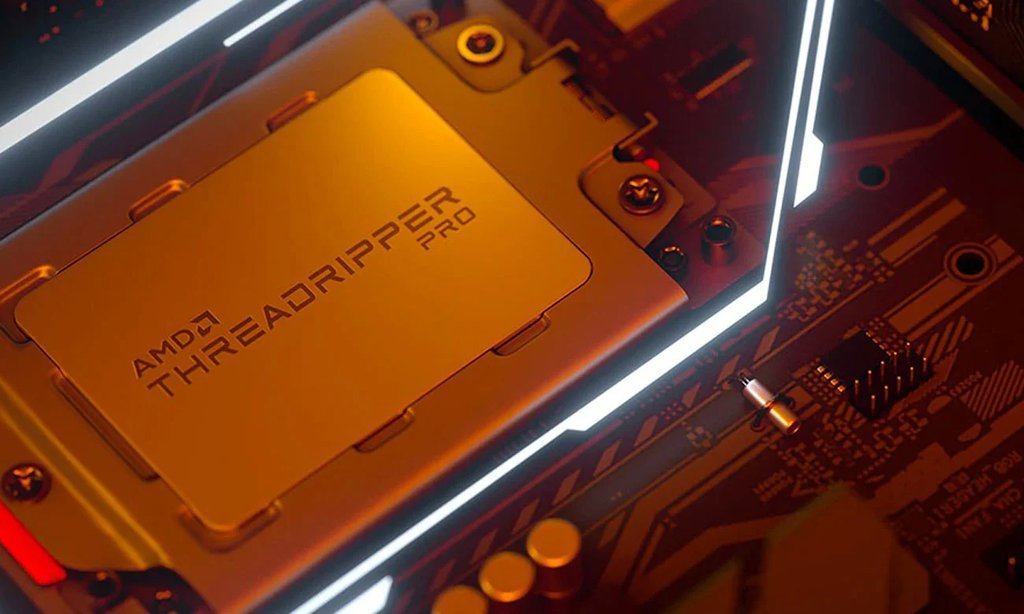
The centerpiece of this entire system is, without question, the AMD Ryzen Threadripper PRO 7995WX. This CPU is less a processor and more a data-processing engine. Built on the advanced “Zen 4” architecture, it packs an astonishing 96 physical cores and 192 simultaneous processing threads. To put that in perspective, a high-end consumer gaming CPU might boast 16 cores. This chip has six times that. With a base clock of 2.5GHz and the ability to boost a single core up to a blistering 5.1GHz, it’s engineered for massive parallel workloads.
What does this mean in practice? Imagine rendering a complex 3D scene in Blender or V-Ray. A task that might tie up a 16-core system for eight hours could theoretically be chewed through in just over an hour. For a data scientist compiling massive datasets or an engineer running fluid dynamics simulations, the ability to run hundreds of threads at once means that iteration times are slashed from days to hours, or hours to minutes. This CPU is also armed with a colossal 384MB of L3 cache, a high-speed memory bank sitting directly on the chip that feeds its 96 cores with the data they need, preventing starvation and keeping them working at peak efficiency. As one industry analyst put it, “The 7995WX isn’t about making one task faster; it’s about doing a hundred tasks at once without breaking a sweat. It’s the definition of parallel computing supremacy in a desktop form factor.”
The Unshakeable Foundation: The ASUS Pro WS WRX90E-SAGE SE
A processor with this much power needs a motherboard that can handle the immense flow of data and provide the connectivity to match. VRLA Tech has chosen the ASUS Pro WS WRX90E-SAGE SE, a board that is effectively the central nervous system for this digital leviathan. This isn’t your standard consumer motherboard; it’s a server-grade platform designed specifically for the WRX90 chipset that Threadripper PRO demands.
Its most critical feature is the support for 8-channel DDR5 memory, allowing for a massive memory bandwidth that is essential for feeding all 96 cores. The board can support up to an incredible 2TB of DDR5 memory, a capacity once reserved for mainframe computers. Furthermore, it unleashes the full potential of the CPU’s I/O with seven PCIe 5.0 x16 slots. This provides an unprecedented 128 lanes of PCIe 5.0 connectivity, the latest and fastest data transfer standard. This bandwidth is crucial for users looking to install multiple high-end GPUs, ultra-fast NVMe storage arrays, and high-speed networking cards without creating a single bottleneck. Every component can communicate with the CPU at its maximum possible speed.
More Than Just a Number: A Deep Dive into Memory and Graphics
While the CPU gets the headlines, the supporting cast of memory and graphics is what transforms potential performance into real-world results. In a workstation, these components are selected not just for speed, but for stability, capacity, and professional-grade reliability.
ECC Memory: The Unsung Hero of Stability
The VRLA Tech workstation comes standard with 128GB of DDR5 RAM. While the sheer amount is impressive, the most important three letters in its description are “ECC.” Error-Correcting Code memory is non-negotiable in a professional environment. Standard consumer RAM can occasionally suffer from single-bit memory errors caused by background radiation or voltage fluctuations. For a gamer, this might result in a rare, inconsequential crash. For a scientist running a week-long simulation or an animator rendering a final shot for a blockbuster film, a single flipped bit could corrupt the entire dataset, wasting days of work and costing thousands of dollars.
ECC RAM contains an extra chip that constantly scans for and corrects these errors on the fly. This ensures absolute data integrity, which is paramount for scientific, financial, and creative tasks where precision is everything. The base configuration uses eight 16GB modules of DDR5-5600 RAM. While the official JEDEC spec supported by the CPU is 5200 MT/s, using slightly faster kits is a common practice among system integrators to eke out extra performance, all while maintaining the crucial stability of the ECC standard.
From Gaming Roots to Professional Muscle: The Graphics Conundrum
Graphics in a workstation serve a dual purpose: visualization and computation. The base model of the VRLA Tech machine includes an NVIDIA GeForce RTX 4060 with 8GB of VRAM. This is a capable, modern GPU that can easily handle driving multiple 4K monitors and offers solid performance for 3D modeling and light GPU-accelerated tasks. It’s a sensible starting point that keeps the entry-level price (relatively) in check.
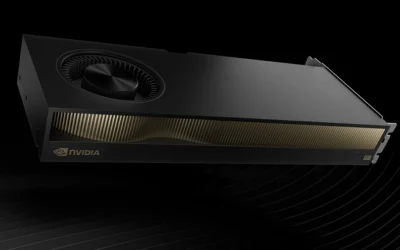
However, the true potential is unlocked through customization. Users can configure the system with up to three top-tier GPUs. This could mean three GeForce RTX 4090s for a deep learning researcher who needs the raw CUDA core count for model training. More likely, it means opting for NVIDIA’s professional-grade RTX Ada Generation cards, such as the RTX 6000 Ada. While a card like the RTX 6000 Ada might share an architecture with its GeForce counterpart, it is a fundamentally different tool. It comes with 48GB of ECC VRAM, certified drivers optimized for stability and performance in professional applications like SOLIDWORKS, Catia, and Adobe Creative Suite, and features that are unlocked only for the professional line. For a high-end animation studio, the investment in certified drivers and massive VRAM is essential for manipulating enormous, complex scenes in real-time without constant crashes or driver-related glitches.
The Art of Customization: Building Your Perfect Brute
A machine like this is never a one-size-fits-all solution. Its true value lies in its adaptability. VRLA Tech presents the base model as a canvas, allowing professionals to paint their ideal configuration based on their specific, demanding workflows. The chassis, a cavernous Fractal Design Define 7 XL, is chosen specifically for its immense internal volume and modularity, providing the space needed for these extreme configurations.
The Storage Spectrum: From Speed Demons to Data Hoards
Modern workflows generate and rely on astronomical amounts of data. The storage configuration is therefore as critical as the CPU. The VRLA Tech platform supports a wide array of options to build a tiered storage system.
A typical high-performance setup might involve:
- Boot & Application Drive: A 2TB or 4TB NVMe PCIe 5.0 SSD. Leveraging the new standard, this drive would deliver sequential read/write speeds exceeding 12,000 MB/s, ensuring the operating system and key applications load almost instantaneously.
- Active Project/Scratch Disk: A larger 8TB NVMe PCIe 4.0 SSD. This provides a massive, ultra-fast workspace for active video projects, 3D scene files, or datasets currently being analyzed.
- Mass Storage/Archive: A RAID array of large-capacity SATA SSDs or traditional HDDs. A user could configure four 16TB SATA SSDs in a RAID 5 array for over 40TB of fault-tolerant storage for completed projects and asset libraries, a necessity for video production houses or research labs.
This ability to mix-and-match blistering speed with cavernous capacity ensures that no part of the workflow is ever left waiting on storage I/O.
Cooling a Miniature Sun: The Thermal Engineering Challenge
Packing this much high-performance hardware into a single case presents a significant thermal challenge. The 96-core Threadripper PRO CPU alone can draw over 350 watts under full load, generating an immense amount of heat. If not managed effectively, this heat would cause the CPU to thermal throttle, drastically reducing its clock speed and negating the entire point of the investment.
VRLA Tech tackles this head-on with a robust cooling solution. The CPU is tamed by a high-performance all-in-one (AIO) liquid cooler, likely a model with a large 360mm or 420mm radiator to maximize heat dissipation. This is augmented by a suite of Noctua case fans, renowned in the enthusiast community for their exceptional performance and near-silent operation. The entire system is engineered for sustained thermal performance, ensuring that whether a render takes ten minutes or ten hours, the CPU and GPUs can maintain their maximum boost clocks, delivering every ounce of their promised performance. The Fractal Design case complements this with its high-airflow design and sound-dampening materials, creating a machine that is unbelievably powerful yet surprisingly quiet under load.
The Bottom Line: Who Is This Machine For, and Is It Worth the Price Tag?
Peeling back the layers of silicon, copper, and aluminum, we arrive at the fundamental question: who actually needs a $55,000 desktop computer? The answer lies in professional contexts where time is, quite literally, money.
Consider a small, independent VFX studio competing for a contract. The ability to render a test shot in 30 minutes instead of four hours allows them to iterate faster, produce a higher quality result, and out-maneuver larger, less agile competitors. For them, a machine that costs as much as a mid-size car might pay for itself on a single project.
Or think of a research institute working on genomic sequencing. The computational power to process and analyze DNA data faster could directly accelerate medical breakthroughs. In this context, the cost of the hardware is trivial compared to the value of the results it can produce.
The VRLA Tech workstation is not for the hobbyist or even the average professional. It is a capital investment for a very specific type of user:
- AI and Machine Learning Engineers: Training complex neural networks on massive datasets.
- High-End VFX and 3D Animators: Working with 8K video timelines, complex particle simulations, and photorealistic ray-traced rendering.
- Scientists and Researchers: Running large-scale simulations in fields like astrophysics, computational fluid dynamics, and molecular modeling.
- Architects and Engineers: Using demanding CAD and BIM software with real-time visualization of massive, intricate structures.
For these individuals and organizations, the price tag isn’t just for hardware; it’s an investment in productivity, capability, and competitive advantage. The base model offers a staggering amount of multi-threaded power, while the fully-loaded version represents the absolute bleeding edge of what’s possible today—a supercomputer in everything but name, ready to tackle the computational challenges of tomorrow.
—
Source: https://www.techradar.com
0 Comments