

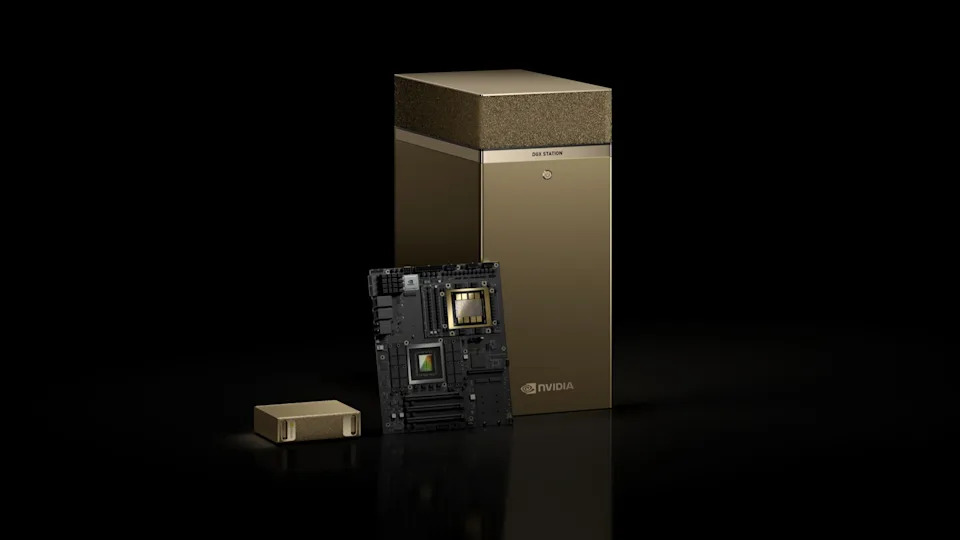
The world of high-performance computing has long been defined by sprawling server racks, complex cooling systems, and a cacophony of fans humming away in sterile, climate-controlled rooms. For the individual AI researcher or developer, tapping into that power has meant a dependency on cloud services, with their metered billing and latency issues. Nvidia’s latest creation, the DGX Spark, aims to shatter that paradigm. It’s a statement piece, an engineering marvel that asks a provocative question: what if you could fit a slice of a data center into a box barely larger than a hardcover novel?
This isn’t just another small form-factor PC. The DGX Spark is a highly specialized instrument, meticulously crafted for one purpose: to accelerate the local AI development lifecycle. From its internal architecture to its spartan, function-over-form exterior, every decision has been made in service of this mission. Measuring a mere 150 by 150 by 50 millimeters, its one-liter chassis could be mistaken for a NUC or a Mac Mini at a glance. But while those machines are jacks-of-all-trades, the Spark is the undisputed master of one. Its industrial design, devoid of RGB lighting or flashy aesthetics, speaks to its serious intent. This is a tool, not a toy, and its focus is on density and thermal efficiency, ensuring the silicon inside can perform at its peak without melting through your desk.
A New Architecture for a New Era of AI – Nvidia DGX
The true revolution of the DGX Spark lies beneath its unassuming metal shell. Nvidia has engineered a system-on-a-chip that fundamentally rethinks the relationship between processing and memory, directly targeting the most significant bottlenecks in modern AI workloads. This isn’t a motherboard with a discrete CPU and a socketed graphics card; it’s a single, cohesive package that integrates a power-efficient Arm-based CPU with a formidable GPU built on the company’s cutting-edge Blackwell architecture. This tight integration is the foundation upon which the Spark’s most transformative feature is built.
The Unified Memory Revolution: 128GB on a Single Chip
For decades, personal computers have operated on a divided memory model. You have system RAM, used by the CPU, and dedicated video RAM (VRAM), used by the GPU. When a complex task like training an AI model is initiated, massive amounts of data must be shuttled back and forth between these two pools across the PCI Express (PCIe) bus. While incredibly fast, this bus is a physical limitation—a highway that can, and often does, become a traffic jam. This is why the amount of VRAM on a GPU has become one of the most critical specifications for AI practitioners.
The DGX Spark obliterates this division. It features a staggering 128GB of LPDDR5X memory that is fully unified. This means both the Arm CPU and the Blackwell GPU have direct, high-speed access to the same enormous pool of memory.
Beyond the VRAM Bottleneck
To put this into perspective, a top-of-the-line consumer GPU like the Nvidia RTX 4090, a beast in its own right, comes with 24GB of VRAM. An AI developer using that card to work with a large language model (LLM) exceeding 24GB must resort to complex techniques like model quantization (shrinking the model’s size, often at the cost of accuracy) or memory offloading (spilling data back into slower system RAM), both of which introduce significant performance penalties.
With 128GB of unified memory, a developer using the DGX Spark can load a massive, state-of-the-art model—such as Meta’s 70-billion-parameter Llama 3 model—entirely into active memory. This allows for unfettered experimentation, rapid fine-tuning, and the development of complex Retrieval-Augmented Generation (RAG) pipelines without the constant, performance-killing shuffle of data. “This is about eliminating latency at the most fundamental level,” explains Dr. Anya Sharma, a fictional industry analyst specializing in AI hardware. “For years, the PCIe bus has been the chokepoint. Unified memory turns that multi-lane highway into a single, massive, instantaneous transport zone. It changes the scale of problems you can feasibly tackle on a local machine.”
The Blackwell Advantage on Your Desk
The GPU component itself is no slouch. While Nvidia has kept the exact specifications under wraps, its foundation in the Blackwell architecture is key. Blackwell is the successor to the Hopper architecture that powers the dominant H100 and H200 data center GPUs, and it’s designed for peak performance and efficiency in AI inference and training. By bringing this technology to a desktop form factor, Nvidia is effectively giving developers a personal, localized version of the same core technology running in the world’s most advanced AI supercomputers.
Connectivity Fit for a Distributed Cluster
The DGX Spark’s data-center DNA is further evident in its connectivity options. Alongside a modern array of ports—including three 20Gbps USB-C connections (all with DisplayPort alternate mode for video output), an HDMI 2.1a port, and a speedy 10Gb Ethernet jack—sit two ports rarely seen outside of a server rack: QSFP connectors.
Driven by an onboard Nvidia ConnectX-7 network interface, each of these QSFP (Quad Small Form-factor Pluggable) ports can handle a blistering 200Gbps of network throughput. This isn’t for downloading files or streaming video; it’s for building a desktop supercomputer. This capability allows researchers to link multiple DGX Spark units together, creating a small, potent distributed computing cluster. One could imagine a small AI startup or a university research lab connecting four or eight of these units to collectively train models or run complex simulations that would otherwise require expensive cloud rentals or access to a shared institutional cluster. It’s a feature that speaks directly to the Spark’s ambition: to not just be a powerful desktop, but a building block for something much larger.
The Software Stack: A Curated, Uncompromising Experience
Powerhouse hardware is only half the equation. The software environment is what unlocks its potential, and here, Nvidia has made a clear and deliberate choice that will define the DGX Spark’s audience. There is no option for Windows. There is no dual-booting. The system runs one thing and one thing only: DGX OS.
This bespoke operating system is a hardened and optimized version of Ubuntu 24.04 LTS, a long-term support release of the popular Linux distribution. But this isn’t just a simple reskin. DGX OS is deeply integrated with Nvidia’s entire software stack, including the CUDA platform, cuDNN, TensorRT, and a host of other libraries that are the lifeblood of the AI and machine learning world. This tight coupling ensures that every ounce of performance is squeezed from the hardware, providing a stable, predictable, and highly performant environment for serious AI work.
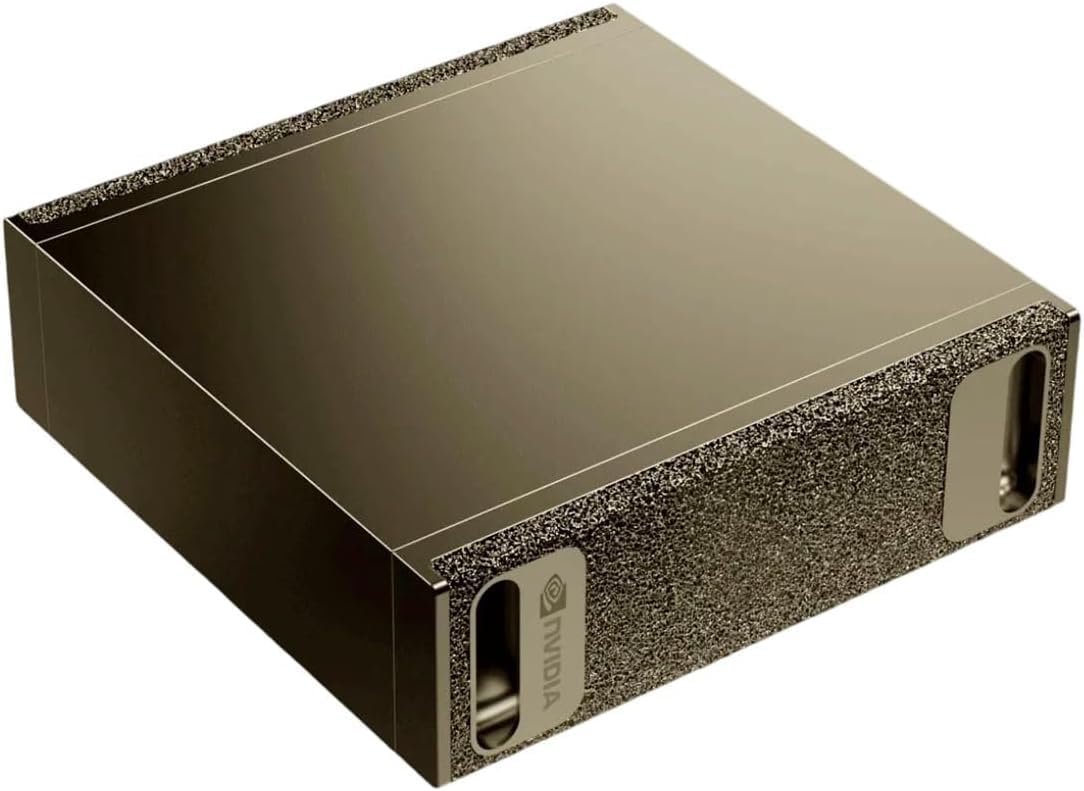
NVIDIA DGX Spark
Check the latest price on Amazon
*Prices on Amazon change frequently
The Great Divide: Why Windows Isn’t on the Guest List
The decision to forgo Windows support is perhaps the most significant trade-off of the DGX Spark, and it immediately bifurcates the potential user base. For the intended audience—data scientists, machine learning engineers, and AI researchers—this is largely a non-issue. The vast majority of the AI development ecosystem is built on and for Linux. Tools, libraries, and frameworks are often developed for Linux first, with Windows and macOS support coming later, if at all.
For anyone outside this bubble, however, it’s a dealbreaker. The DGX Spark cannot run the Adobe Creative Suite, Microsoft Office, or the vast library of Windows-exclusive software and games. Its Blackwell GPU, while a titan for matrix multiplication and tensor core operations, is not optimized for gaming or general-purpose graphics tasks. Nvidia’s message is crystal clear: if your primary work involves spreadsheets, video editing, or playing the latest AAA title, this machine is not for you. This is a forge for building AI, and anything that distracts from that purpose has been stripped away.
Living with a Headless Titan
Nvidia understands that while developers work in a Linux environment, their primary personal computer might be a Windows laptop or a MacBook. To bridge this gap, the DGX Spark is designed to operate in two distinct modes. It can be used as a traditional, locally attached computer with a monitor, keyboard, and mouse plugged directly into it.
More compellingly, it can run as a “headless” system. In this mode, the Spark sits quietly on a network, and a developer can access its immense power remotely from their machine of choice. Nvidia’s Sync utility simplifies this process, allowing a user on Windows or macOS to seamlessly offload their heavy AI computations to the Spark. Imagine writing Python code in Visual Studio Code on your MacBook Air, leveraging Apple’s high-speed SSD architecture in modern MacBooks, and with a simple command, sending a model to be trained on the Spark, which hums away in the background. It’s a workflow that combines the familiarity of your preferred daily-driver OS with the specialized, on-demand power of a dedicated AI appliance.
The Bottom Line: A Pricey Proposition for the AI Elite
Nvidia has not officially announced pricing, but all indications suggest the DGX Spark will command a premium. It will likely sit far above the cost of even the most powerful mini-PCs and will rival or exceed the price of many custom-built desktop workstations. This high barrier to entry further refines its target market.
This is not a machine for the curious hobbyist looking to generate images with Stable Diffusion on the weekend. This is a capital expense for professionals and organizations for whom time is money and computational power is a direct enabler of progress. The ideal customer is the freelance AI consultant prototyping models for clients, the small startup that needs a local testbed before deploying to the cloud, or the enterprise data science team needing a powerful, secure, on-premises machine for sensitive projects.
When viewed through the lens of Total Cost of Ownership (TCO), the value proposition becomes clearer. For an individual or team that consistently spends thousands of dollars per month on cloud GPU instances, investing in a DGX Spark could prove more economical over a one- or two-year period, with the added benefits of zero latency and complete data privacy. It’s a tool for those who run demanding AI workloads daily, not weekly. For anyone else, its immense potential will likely sit untapped, making its high cost difficult to justify. The DGX Spark assumes that local AI experimentation is your job, not just a part of it. It’s a powerful assumption, and for the right user, it’s a game-changer. For everyone else, it remains a fascinating glimpse into a future where supercomputing power is no longer confined to the data center, but sits right on your desk.
Source: https://www.techradar.com



0 Comments