

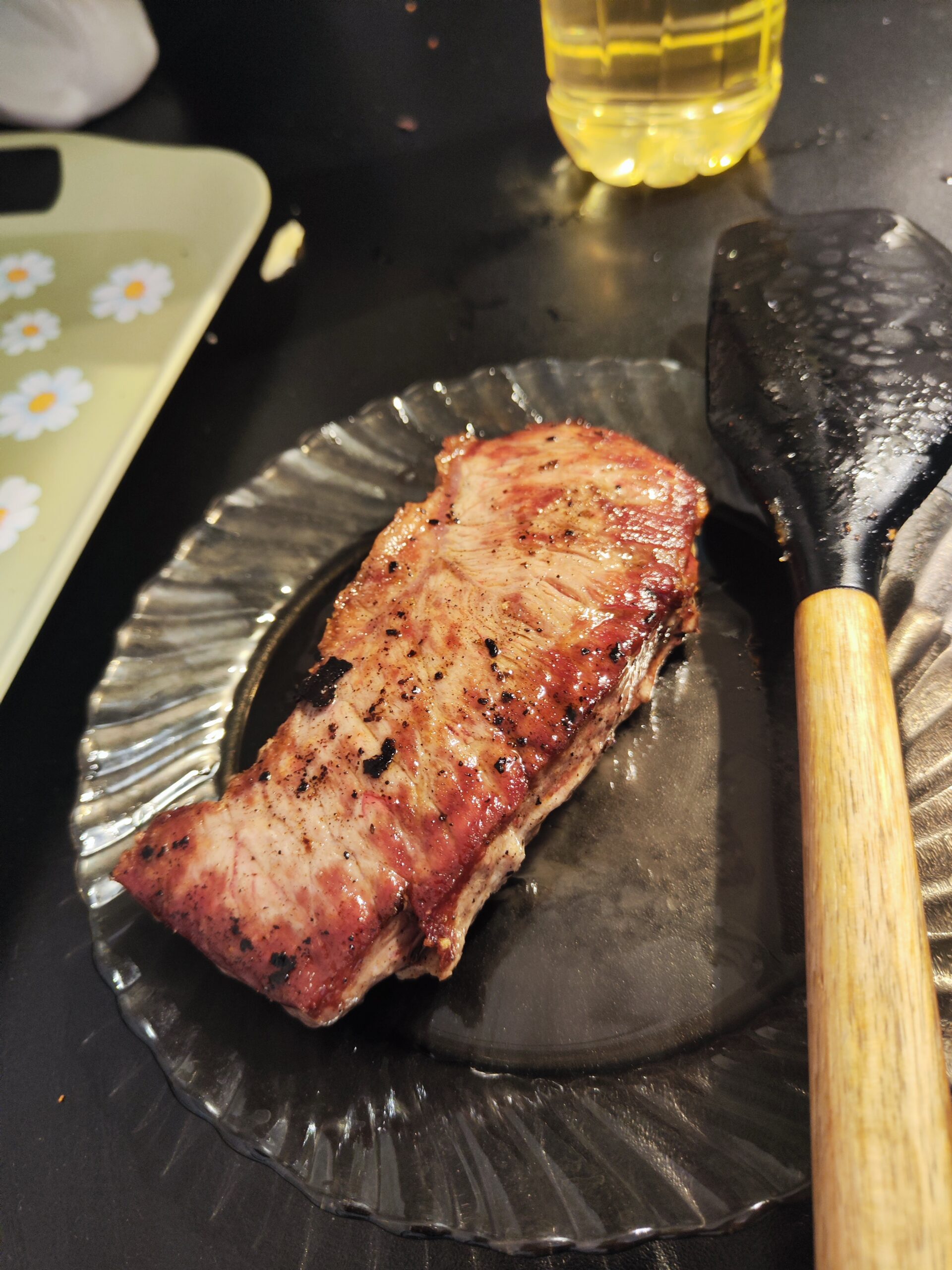
Preparing the perfect steak at home is often seen as a culinary peak, reserved for chefs in expensive restaurants. Nothing could be further from the truth. Armed with the right knowledge, high-quality meat, and a few key tools, anyone can create a dish that delights with its depth of flavor, perfect texture, and juiciness.
This guide is a comprehensive compendium that will take you step by step through the entire process – from choosing the meat, through preparation, various cooking techniques, to the crucial, often overlooked stage of resting. Forget tough, gray, and dry beef. It’s time for a true feast.
Chapter 1: The Foundation of Success – Choosing the Meat
It all starts at the butcher or a good meat store. The quality of the beef is absolutely essential – not even the best chef can conjure a great steak from a poor cut. What should you look for?
- Cut of Beef: Different parts of the cow offer steaks with unique flavors, textures, and fat content. Here are the most popular:
- Ribeye: The king of steaks for many. Cut from the upper rib section, it’s well-balanced and marbled with intramuscular fat. It features a central “eye” of fat that melts during cooking, delivering exceptional juiciness and flavor.
- New York Strip / Striploin: A dense, beefy cut with a solid texture. It has less internal fat than ribeye but usually has a generous fat cap on one edge that adds flavor during cooking.
- Filet Mignon (Tenderloin): The most tender and lean of the popular steaks. It comes from a muscle that does very little work, resulting in a buttery, subtle flavor. Because of its low fat content, it dries out easily and needs careful attention.
- T-Bone / Porterhouse: Two steaks in one, separated by a T-shaped bone. One side contains striploin, the other a smaller tenderloin. The porterhouse is the “premium” version, with a larger portion of tenderloin. A steak for the undecided – and the very hungry.
- Marbling: This is the network of fine, white fat streaks within the muscle. The more marbling, the tastier, juicier, and more tender the steak. Fat is a flavor carrier! Look for meat that resembles red marble.
- Dry-Aging: A process where beef is aged under controlled humidity and temperature for several weeks to months. Water evaporates, concentrating flavor, while natural enzymes break down connective tissue, making the meat incredibly tender. Dry-aged steaks have a deep, nutty-buttery aroma – more expensive, but worth it.
- Thickness: The ideal steak should be at least 3–4 cm thick (about 1.5 inches). This thickness allows for a crispy crust on the outside while keeping the desired doneness inside. Thin steaks (1–2 cm) cook too quickly and are nearly impossible to keep pink inside without burning the surface.
Chapter 2: The Ritual of Preparation
You’ve chosen the perfect cut. Before it hits the pan, a few crucial steps are needed.
- Bring to Room Temperature: This is a critical step. Take the steak out of the fridge at least 30–60 minutes before cooking (even up to 2 hours for thick cuts). Cold meat on a hot pan drastically lowers the pan’s temperature, making it difficult to get a good sear. It also cooks unevenly – overdone on the edges and raw in the center.
- Perfect Drying: Moisture is the enemy of a crisp crust. Use paper towels to thoroughly pat the steak dry. Wet meat will steam, not sear, preventing the Maillard reaction – the magical chemical process responsible for browning and flavor development.
- Seasoning – The Great Debate:
There are two main schools of thought:- Salting well in advance (up to 24h): Salt draws out moisture, which then dissolves the salt and is reabsorbed into the meat (osmosis), resulting in deeper seasoning and a drier surface.
- Salting just before cooking: The safest and most popular method. It prevents the steak from “sweating” if you don’t have time to wait.
Chapter 3: Choosing Your Weapon – Cooking Techniques
A. The Classic: Cast Iron Skillet
Your best friend for steak mastery at home. The thick base of a cast iron pan holds and distributes heat evenly, maintaining high temperatures even after placing the steak in.
- Fat: Use oil with a high smoke point like canola, rice, grapeseed, or clarified butter. Regular butter burns too quickly.
- Heating: Place the skillet over high heat for several minutes. It must be blazing hot. When the oil starts shimmering and faintly smoking, it’s ready.
- Searing: Place the steak in the pan. You should hear an aggressive sizzle – the sound of success. Don’t move the steak for the first 2–3 minutes. Let it develop a solid, brown crust.
- Flipping: Flip the steak and cook the other side for a similar time. For thick cuts, sear the edges too, using tongs.
- Aromatic Finish (Basting): In the last 2 minutes of cooking, reduce the heat. Add 2–3 tablespoons of real butter, a few crushed garlic cloves, and a sprig of rosemary or thyme. Once the butter melts, tilt the pan and baste the steak repeatedly with the foamy, aromatic butter. This adds flavor and helps cook it evenly.
B. Precision Perfection: Reverse Sear
An almost foolproof method for evenly cooked steak from edge to edge – ideal for thick cuts (over 4 cm).
- Preheat the oven to a low temperature (110–130°C / 230–265°F).
- Place the seasoned steak on a wire rack over a baking sheet. Insert a meat thermometer into the center of the steak.
- Cook slowly until the internal temperature is 5–7°C below your target doneness (see table below). This takes 30–60 minutes.
- Remove the steak from the oven. Heat a cast iron skillet to extremely high temperature with a little oil.
- Sear the steak on each side for just 45–60 seconds, until a beautiful brown crust forms. At this point, you can also add butter and aromatics.
Chapter 4: The Key to Juiciness – Doneness Levels and Thermometers
Forget the “finger test” – it’s wildly unreliable. A meat thermometer is the only 100% accurate way to check doneness. Insert it into the thickest part of the steak, away from any bone.
Here’s a doneness chart (remember the temp will rise 2–3°C as it rests):
| Doneness Level | Description | Internal Temp |
|---|---|---|
| Blue Rare | Seared, raw and cool inside | 46–49°C (115–120°F) |
| Rare | Cool, red center | 52–55°C (125–130°F) |
| Medium Rare | Warm, red center (recommended!) | 55–57°C (130–135°F) |
| Medium | Warm, pink center | 60–63°C (140–145°F) |
| Medium Well | Slightly pink center | 65–68°C (150–155°F) |
| Well Done | Gray, no pink (not recommended) | >71°C (160+°F) |
Chapter 5: The Most Important Step – Patience and Resting
This is an absolute MUST. During cooking, juices are pushed toward the center by the high heat. If you cut the steak immediately after removing it from the pan, all those precious juices will spill out onto the cutting board, leaving you with dry meat.
- How to rest? Place the steak on a cutting board or wire rack. You can loosely cover it with foil to prevent it from cooling too quickly.
- How long? At least 5 minutes. The golden rule: rest it for about half the time it was cooked (so 7–10 minutes is ideal).
During this time, muscle fibers relax and juices redistribute evenly throughout the steak.
Chapter 6: The Grand Finale – Slicing and Serving
After resting, the steak is ready. Use a very sharp knife and slice it against the grain. You’ll see visible lines running through the meat – cut perpendicular to those. This makes even tougher cuts much easier to chew.
Serve immediately, sprinkled with sea salt flakes (like Maldon) and freshly ground black pepper. A dollop of herb butter on the hot steak is also a fantastic finishing touch.
Cooking the perfect steak is a process that blends science, art, and a bit of practice. Don’t get discouraged if your first attempt isn’t perfect. Analyze, learn, and try again. The reward is an unmatched culinary experience – a symphony of flavor, aroma, and texture you created with your own hands.
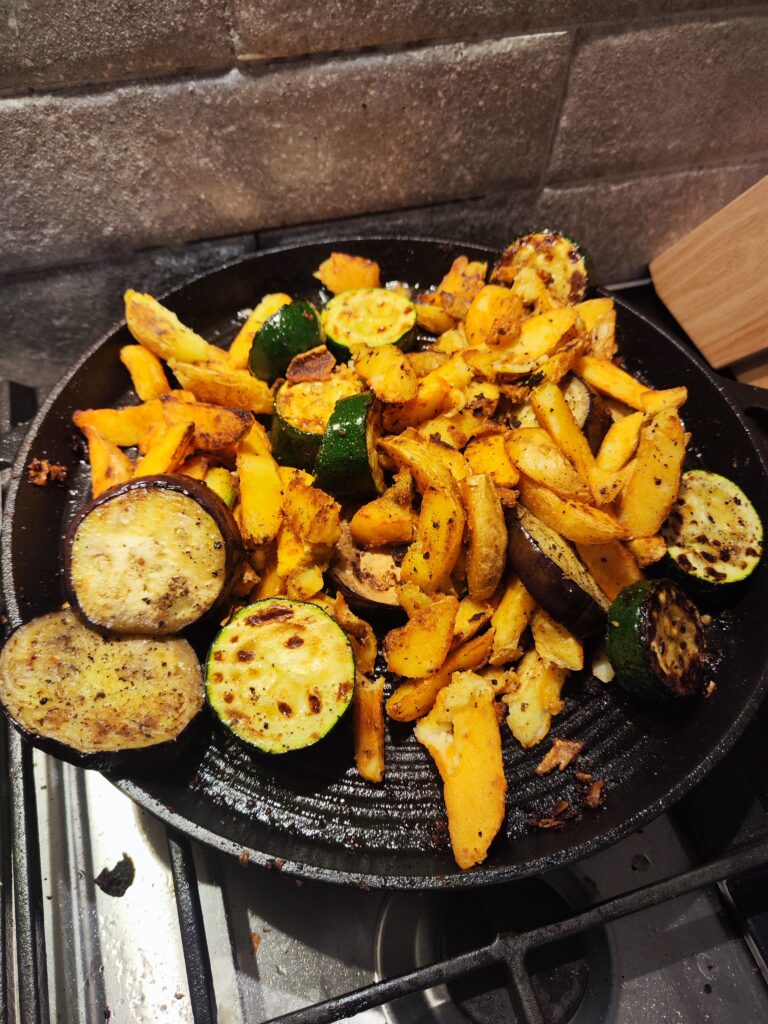
The steak can be served with baked potato slices and vegetables.
Enjoy!


0 Comments