

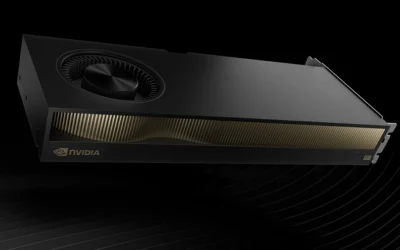
NVIDIA, the undisputed leader in the AI chip market, is executing another strategic maneuver to maintain its presence in China. The company is preparing to launch a special, scaled-down version of its latest Blackwell-based chip. This is a carefully calculated response to increasingly strict U.S. export restrictions aimed at slowing Beijing’s technological advancement.
Blackwell Under Sanctions – A Battle for a Key Market
The decision to create a dedicated chip for China comes as no surprise. It marks NVIDIA’s third attempt to adapt its offering to the rapidly evolving regulations from the U.S. Department of Commerce. China, which not long ago accounted for as much as 13% of the company’s annual revenue, remains far too valuable a market to ignore.
However, since the sanctions were imposed, NVIDIA’s dominance has significantly weakened. Its once 95% share of China’s AI chip market has dropped to around 50%.
What Is the New Chip? High-Tech in Chains
According to Reuters, the new product will be precisely engineered to comply with export rules — a design shaped by numerous technical compromises.
- Name and Price: Industry reports suggest the chip may be called the B40 or 6000D. Its price is expected to be significantly lower, ranging from $6,500 to $8,000, compared to the sanctioned H20, which sold for up to $12,000.
- Key Technical Trade-offs: The reduced price comes from notable downgrades:
- Memory: Instead of ultra-fast HBM (High Bandwidth Memory), a staple in top AI accelerators, the chip will use more conventional, yet modern, GDDR7 memory. HBM acts like a high-speed data highway — essential for training large language models. By opting for GDDR7, NVIDIA limits bandwidth but stays within regulatory boundaries.
- Packaging: The chip will not be manufactured using TSMC’s advanced and expensive CoWoS packaging technology. CoWoS enables multiple chiplets (CPU cores and memory modules) to be closely integrated on a single substrate, dramatically boosting performance. Omitting this tech is another way to reduce overall computing power.
A Cat-and-Mouse Game with Regulators
From a technical standpoint, memory bandwidth is the most critical metric. The new chip is designed to deliver around 1.7 terabytes per second (TB/s). This figure isn’t arbitrary — it’s been carefully tuned to remain just below the performance threshold set by U.S. regulators for unrestricted export.
While that level of performance still supports many AI workloads, it rules out the most advanced use cases — such as training foundational AI models at scale.
What’s Next? NVIDIA Won’t Back Down
Creating a “trimmed-down” Blackwell chip is NVIDIA’s way of trying to strike a balance — complying with legal restrictions while slowing customer attrition to domestic competitors. Moreover, the company is already looking ahead: reports suggest NVIDIA is developing another Blackwell-based chip for China, with production potentially starting as early as September.
This is clear evidence that despite geopolitical tensions and tech rivalry, NVIDIA is determined to fight for the Chinese market — even if it means offering weaker, cheaper products than in the rest of the world. It’s a high-stakes game, where billions of dollars and the future of the global tech landscape are on the line.
Source: Reuters


0 Comments