

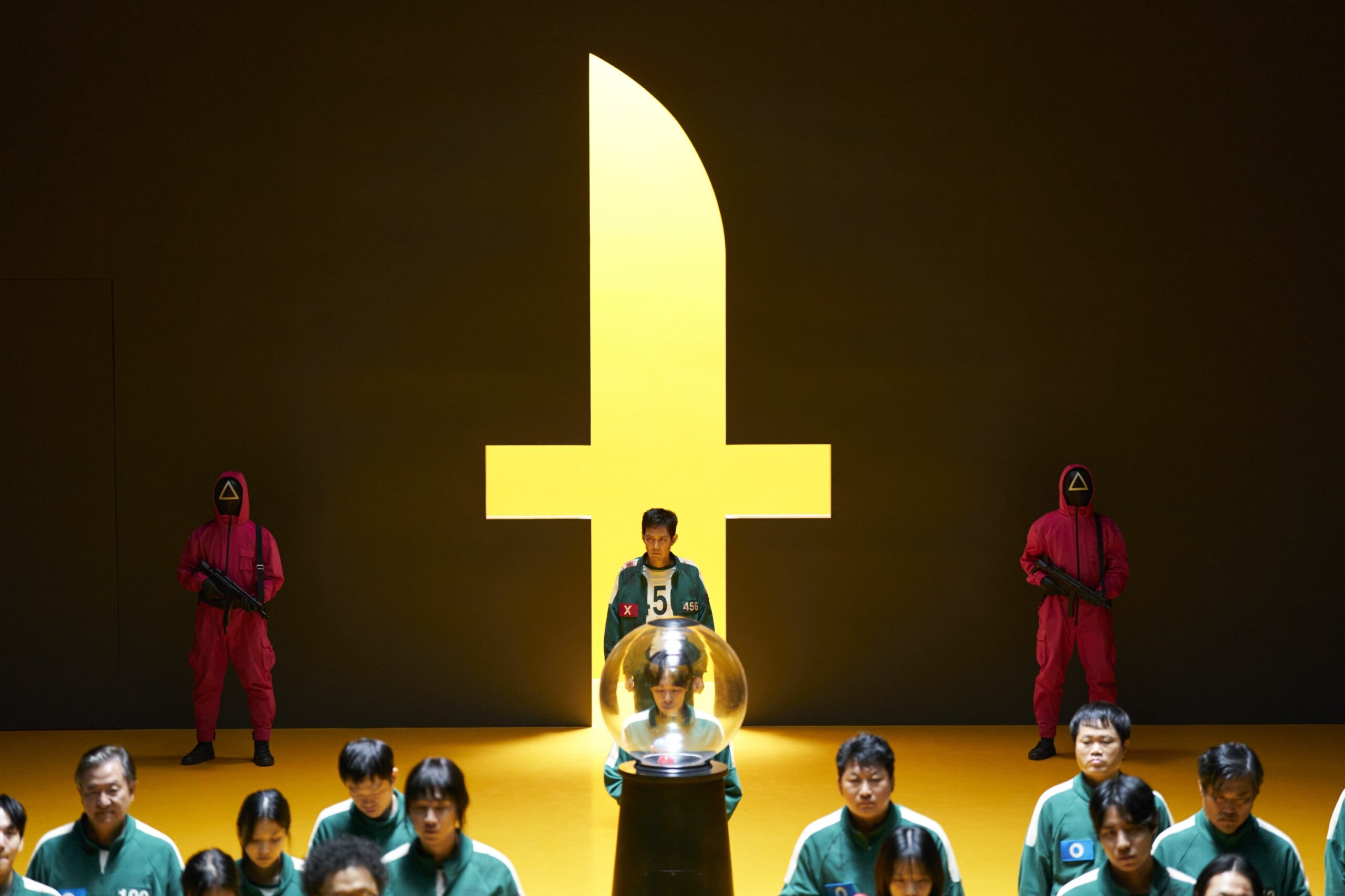
The third season of Squid Game premiered on Netflix on June 27 and immediately stirred strong emotions. This long-awaited final chapter concludes a globally popular story that captivated millions. The last episode not only reveals who survived but also introduces unexpected twists and powerful symbolism.
⚠️ Warning: Spoilers for the Season 3 finale ahead!
Gi-hun’s Final Decision – A Symbolic Sacrifice
In the climactic moment of the finale, Seong Gi-hun (Lee Jung-jae) faces the most difficult decision of the entire series. At the top of the third tower in the so-called Sky Squid Game, he must choose between killing a baby, dying alongside it, or sacrificing himself to save an innocent life. He chooses the latter—giving up his life to protect Jun-hee’s newborn child.
His act of sacrifice not only ends the game but also concludes his personal journey—from a broken, desperate man to a true hero who reminds the VIPs and game organizers that players are not pawns or animals, but human beings.
An Unexpected Winner – Baby No. 222
In a deeply moving and original twist, the winner of the game is none other than a newborn—Player 222. Jun-hee’s baby survives thanks to Gi-hun’s selfless protection. The rules of the final stage were complex: each round had to be activated by pressing a button. Gi-hun chooses to press it, knowing that giving up his life is the only way to ensure the child’s survival.
Myung-gi (Yim Si-wan), the main antagonist of the finale, dies outside an official round, which disqualifies him from winning.
Front Man’s Surprising Change
After the events on the island, Front Man (Lee Byung-hun)—previously a ruthless orchestrator of the game—shows unexpected humanity. He takes the baby and disappears. Six months later, he breaks into the apartment of his brother Jun-ho (Wi Ha-jun), leaving the child and the 4.56 billion won prize behind. This act suggests that some remnants of his humanity have survived, despite years of serving the brutal system.
The Symbolism of Myung-gi and the Message of the Finale
Myung-gi represents unrestrained selfishness, greed, and moral decay. In contrast to Gi-hun’s compassion and hope, he embodies the darkest parts of human nature—the willingness to sacrifice everything for personal gain. Though his death is brutal, it brings no victory. Gi-hun’s act of self-sacrifice is the one that is truly honored.
What Happened to the Other Characters?
- No-eul (Park Gyu-young) escapes the island and reunites with Gyeong-seok, a man she once saved. Though he doesn’t recognize her, he now lives safely with his daughter, Na-yeon.
- Jun-ho confronts his brother, the Front Man. Though he receives no answers, he is entrusted with Jun-hee’s baby and the prize money.
- Cheol, Sae-byeok’s younger brother, finds his mother in a touching airport reunion, fulfilling his sister’s wish from season one.
Is This Really the End? A U.S. Version Is Coming
Just before the Season 3 premiere, Netflix confirmed the development of an American Squid Game adaptation. Directed by David Fincher (Se7en, Zodiac) and written by Dennis Kelly (Utopia), the project will not be a direct remake but a new story set within the same universe.
The setting will shift to the United States or the UK, offering a fresh take on the concept. This version aims to expand the Squid Game world and explore how deadly games might look in different cultural and social contexts.
What Does the Ending of “Squid Game” Really Mean?
Season 3 ends on a deeply symbolic note. The victory of an innocent child represents hope, redemption, and a new beginning. Gi-hun’s death carries a messianic tone—his sacrifice disrupts the system, prompts reflection in the Front Man, and might even spark a change in the rules of the game.
More than just a critique of social inequality, the series leaves us with a profound question:
In a world ruled by cruelty and competition, is it still possible to preserve our humanity?



0 Comments