

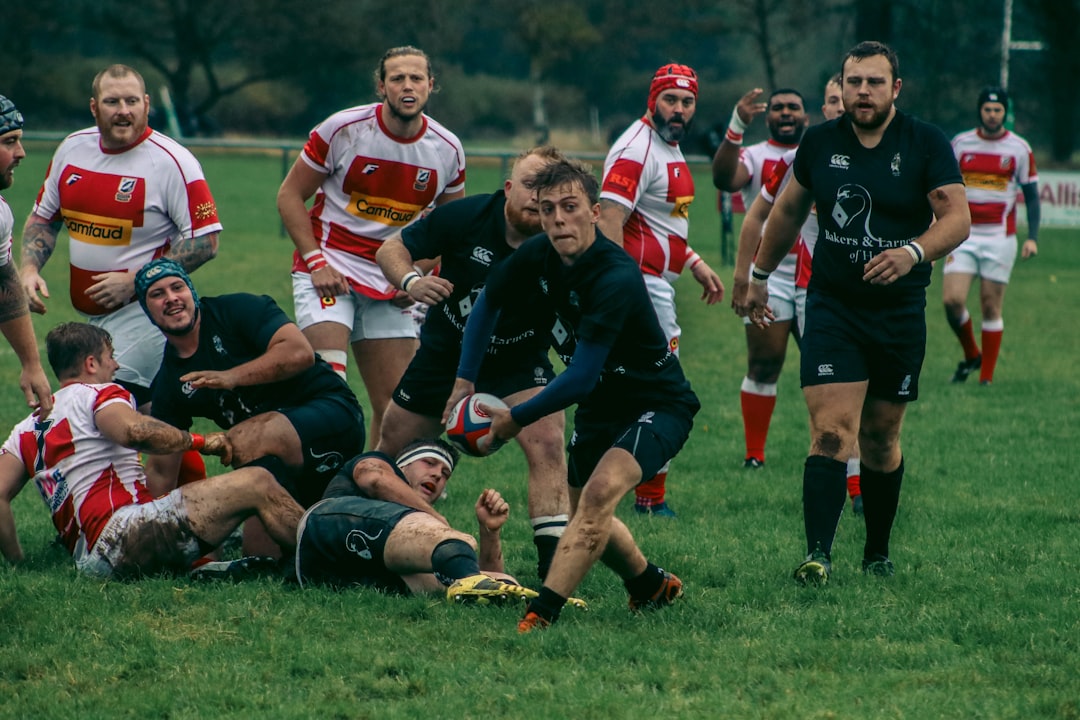
The Northern Hemisphere’s Fortress Under Siege
For the Six Nations powerhouses, November is more than just a series of Test matches; it is a referendum on their progress and a fierce defence of their home turf. The memory of the last World Cup lingers, and with the next cycle now in full swing, these games serve as a critical barometer. The pressure is immense, not only to win but to win with a style and authority that sends a message south of the equator. From Dublin to Cardiff, London to Paris, the battle lines are drawn, and home advantage will be a weapon they must wield with ruthless efficiency.
England’s Renaissance: Can Borthwick Finally Unleash the Attack?
For years, English rugby has been synonymous with a pragmatic, power-based game plan—a “win at all costs” mentality that often sacrificed flair for functionality. Under Steve Borthwick, the foundations of that forward dominance and set-piece security have been painstakingly rebuilt. Yet, the calls from the Twickenham faithful for a more expansive, thrilling brand of rugby have grown deafening. The 2025 series feels like a turning point, a moment where Borthwick’s England must evolve or risk stagnation. The selection of George Ford at fly-half, a masterful conductor with a deft passing game, over a more physically imposing option signals a clear intent. The experimental deployment of players like the electric Tommy Freeman in the midfield and even testing dynamic flankers on the wing suggests a coaching staff desperate to find new ways to unlock stubborn defences.
“They’ve built the engine; now they need to learn how to open it up on the motorway,” commented one former England international. “The question is whether they can maintain their traditional forward strength while adding that attacking dimension. Playing against the likes of New Zealand and South Africa, you can’t just rely on one way to win. You need a Plan A, B, and C.” This November will be the ultimate test of that evolution. Facing the relentless physicality of the Springboks and the lightning-quick counter-attacks of the All Blacks will reveal whether this new-look England is a genuine contender or merely a work in progress.
Ireland’s Returning Legion: Farrell’s Grand Slammers Face the Ultimate Test
The Irish rugby machine has been one of the most consistent and formidable forces in the world for the past five years. After a brief sojourn leading the British & Irish Lions, head coach Andy Farrell returns to a squad that is both battle-hardened and brimming with talent. The return of 18 Lions tourists, including the talismanic and now fully-fit Caelan Doris, means there will be no excuses. This is a team at the peak of its powers, with a home record at the Aviva Stadium that is the envy of world rugby. Yet, shadows loom in the form of their November opponents: the All Blacks and the world champion Springboks.
These are the fixtures that define legacies. While Ireland has enjoyed unprecedented success against New Zealand in recent times, including a historic series win on Kiwi soil, the All Blacks will arrive with a point to prove. The greater challenge, perhaps, lies in the evolution of their own game. With Johnny Sexton’s era now firmly in the past, the pressure mounts on his successors. Young fly-half Sam Prendergast, lauded for his prodigious talent, will have his game management and nerve tested in the white-hot intensity of these encounters. Can he orchestrate a victory against the world’s most feared defensive systems? Farrell’s challenge is to integrate his returning stars seamlessly while empowering the next generation to take ownership. Anything less than two landmark victories will feel like a missed opportunity for a team with ambitions of being the undisputed best on the planet.
France’s Dupont Dilemma and Gallic Grit
The collective gasp could be heard from Paris to Toulouse when news of Antoine Dupont’s potential absence for much of the series broke. For Les Bleus, Dupont is more than a captain; he is the heartbeat of the team, the conductor of their chaotic, beautiful orchestra. Playing without him against the brutal efficiency of South Africa is a terrifying prospect. The injury list has not stopped there, with key figures like fly-half Matthieu Jalibert and the colossal lock Romain Taofifenua also sidelined. This series will therefore become the ultimate examination of France’s famed squad depth.
Head coach Fabien Galthié has cultivated a vast pool of talent, but replacing a player often described as the best in the world is a unique challenge. The onus will fall on players like Maxime Lucu at scrum-half and a re-jigged backline to maintain the fluid, offloading style that makes France so dangerous. Their opening fixture against the Springboks is already being billed as the match of the autumn. It’s a clash of styles and philosophies: the structured, suffocating power of South Africa against the unpredictable, explosive flair of France. For the French, this is a chance to prove they are not a one-man team but a genuine rugby superpower, capable of absorbing blows and fighting back with their characteristic panache. A victory would be a monumental statement of intent.
The Celtic Conundrums: Scotland’s Brawn and Wales’s Rebirth
A Familiar Refrain for Scotland
For Scotland, November brings a familiar challenge: translating their undeniable attacking brilliance into consistent, 80-minute performances against the world’s elite. In Finn Russell, they possess a mercurial artist at fly-half, a player capable of moments of magic that can unlock any defence. He is complemented by a backline, featuring the likes of Blair Kinghorn and Darcy Graham, that boasts pace and finishing prowess in abundance. The problem, as has so often been the case, lies in the engine room. The Scottish pack has struggled for parity, let alone dominance, against the monstrous forwards of teams like South Africa. Without a solid platform, Russell’s magic wand can be rendered useless. Gregor Townsend knows his side needs to find a harder, more resilient edge upfront if they are to enter the next Six Nations as genuine title contenders rather than just exciting spoilers.
Wales’s Long Road Back
The Welsh rugby landscape has been turbulent, to say the least. A painful 18-game losing streak was a nadir for a proud rugby nation, but a recent victory over Japan has provided a glimmer of hope under the new era of coach Steve Tandy. The biggest story, however, is the sensational return of Louis Rees-Zammit. After a high-profile stint chasing his NFL dream, the winger, blessed with world-class speed, is back in a Welsh jersey. His presence alone injects a dose of star power and hope into a team undergoing a painful rebuild. For Wales, this November is less about a clean sweep of victories and more about performance and progress. They need to show they can compete physically with the top teams, that their young players are developing, and that the return of their prodigal son can spark a genuine revival. Every small victory, be it a dominant scrum or a well-executed try, will be a building block for the future.
The Southern Hemisphere Invasion: A Quest for Dominance
For the Rugby Championship teams, the annual pilgrimage north is an opportunity to assert their dominance and silence the critics. The conditions are different, the referees interpret the game with a different nuance, and the hostile home crowds create an intimidating atmosphere. This is where champions are tested. South Africa, New Zealand, and Australia arrive with distinct missions, each carrying the weight of expectation from their demanding supporters back home.
The Springbok Juggernaut: Inconsistency Masks a Terrifying Power
The reigning world champions, South Africa, remain the benchmark for sheer physical power in world rugby. Their “Bomb Squad” strategy, bringing on a fresh set of gigantic forwards in the second half, is a weapon that few teams can contain. And yet, for all their dominance, an air of inconsistency has followed them since their World Cup triumph. A recent Rugby Championship campaign saw them nearly squander a 22-0 lead against Australia, a sign of a mental fragility that belies their fearsome reputation. Coach Rassie Erasmus will be demanding a ruthless streak from his team across their five-match tour. The tour also offers a glimpse into the future, with the emergence of sensational young fly-half Sacha Feinberg-Mngomezulu. His calm temperament and creative spark offer a different dimension to the Springboks’ traditionally pragmatic game plan. If he can continue his stellar form on European soil, the world champions may become an even more terrifying proposition.
All Blacks at a Crossroads: Robertson’s Revolution Faces Scrutiny
It is a strange time for New Zealand rugby. For the first time in a generation, an aura of vulnerability surrounds the All Blacks. Under new head coach Scott Robertson, a man known for his breakdancing and innovative coaching, the team has been inconsistent. They have traded the world number one ranking back and forth, showing flashes of their brilliant, high-tempo best, followed by performances riddled with uncharacteristic errors. The pressure on Robertson is already mounting. The November tour is his first major test in the northern hemisphere, and the European media and public will be watching intently. The presence of the three Barrett brothers—Beauden, Scott, and Jordie—provides a core of world-class experience, while the development of scrum-half Cam Roigard offers excitement. But the fundamental questions remain: Can Robertson forge a new identity for this team? And can they rediscover the clinical, ruthless edge that made them the most feared team in sport for over a decade? Their clashes in Dublin and London will provide some definitive answers.
Wallabies on the Rise and Pumas on the Prowl
After years in the doldrums, there are signs of a genuine resurgence in Australian rugby. Their impressive showing against the Lions was followed by a landmark Rugby Championship campaign, highlighted by their first victory at the daunting Ellis Park in Johannesburg in 62 years—a statistic that sent shockwaves through the sport. Under a new, dynamic coaching setup, the Wallabies are playing with a renewed sense of belief and structure. Their greatest concern remains the fitness of their colossal number 8, Rob Valetini, whose presence is central to their physical game. If they can keep their key players on the park, they have the talent to trouble any team in Europe. Alongside them, Argentina’s Pumas will bring their trademark passion and physicality. Always a tough opponent, Los Pumas thrive on their underdog status and will be targeting at least one major scalp on their tour to build momentum for the years ahead.
The Global Game-Changers: More Than Just Making Up the Numbers
This series is not just about the traditional powerhouses. A host of other nations arrive with the ambition to disrupt the world order, showcasing the growing depth and global appeal of rugby union.
Fiji’s Flying Fijians: The Unpredictable Force of Nature
Fresh from a spectacular World Cup campaign that saw them defeat Australia, Fiji is no longer a “Tier 2” nation in anything but name. With a squad packed with players starring in Europe’s top leagues, they combine jaw-dropping natural athleticism with ever-improving tactical nous. They are the team that no one wants to play, capable of scoring from anywhere on the field.
Japan’s Brave Blossoms: Precision and Pace Seek a Major Scalp
Japan continues to be a standard-bearer for exciting, high-tempo rugby. Their intricate passing patterns and relentless pace can stretch even the most organized defences. Their mission in November is clear: to prove they can consistently defeat the Tier 1 giants and cement their place at rugby’s top table.
The Americas and the Pacific: Building for the Future
For nations like the USA and Tonga, these matches are vital for development and exposure. With the Rugby World Cup heading to the United States in 2031, every Test match for the Eagles is a crucial step in building a competitive team and growing the game’s profile domestically. Tonga, powered by passion and immense physicality, will bring their unique brand of hard-hitting rugby, looking to cause an upset that would resonate throughout the Pacific Islands.
The Battle Off the Pitch: Where to Witness Every Collision
For rugby aficionados across the globe, catching every scrum, tackle, and try is paramount. The broadcast landscape can be complex, but here’s a breakdown of how to immerse yourself in the November action.
In the UK, a mix of free-to-air and subscription services will cover the games. For Welsh supporters, S4C and BBC iPlayer will provide Welsh-language coverage of their team’s matches. Other select games may appear on free-to-air channels, but for comprehensive coverage, TNT Sports (via a Discovery+ plan) is the primary broadcaster. In Ireland, free-to-air broadcaster Virgin Media is set to show all of Ireland’s home fixtures, making the action accessible to the entire nation.
For viewers in the Southern Hemisphere, dedicated sports broadcasters will be the port of call. SuperSport holds the rights in South Africa, while Stan Sport in Australia and Sky Sport in New Zealand will be the homes for every match, requiring subscriptions. In the USA, Peacock TV continues to be the primary platform for international rugby. For those travelling abroad, a reliable VPN service like NordVPN can be invaluable, allowing you to access your home broadcast service by making your device appear as if it’s in your home country, ensuring you don’t miss a moment of the drama.
Source: https://www.techradar.com



0 Comments